



Srinagar, Sep 2: Ladakh’s fragile high-altitude ecosystems and rich bird diversity are coming under increasing pressure from infrastructure expansion, tourism, habitat alteration, climate change, exotic plantations and feral dogs, according to a scientific assessment submitted before the National Green Tribunal (NGT).
The assessment, prepared by the Salim Ali Centre for Ornithology and Natural History (SACON) and the Wildlife Institute of India, documents 464 bird species in Ladakh, including 197 breeding species. Of these, 65 species have been classified as being of “High Conservation Concern”.
The report was submitted before the Principal Bench of the NGT in Original Application No. 1339/2024 following directions from the Tribunal seeking scientific information on the conservation of bird species and their habitats in Ladakh amid concerns over growing tourism and developmental activity.

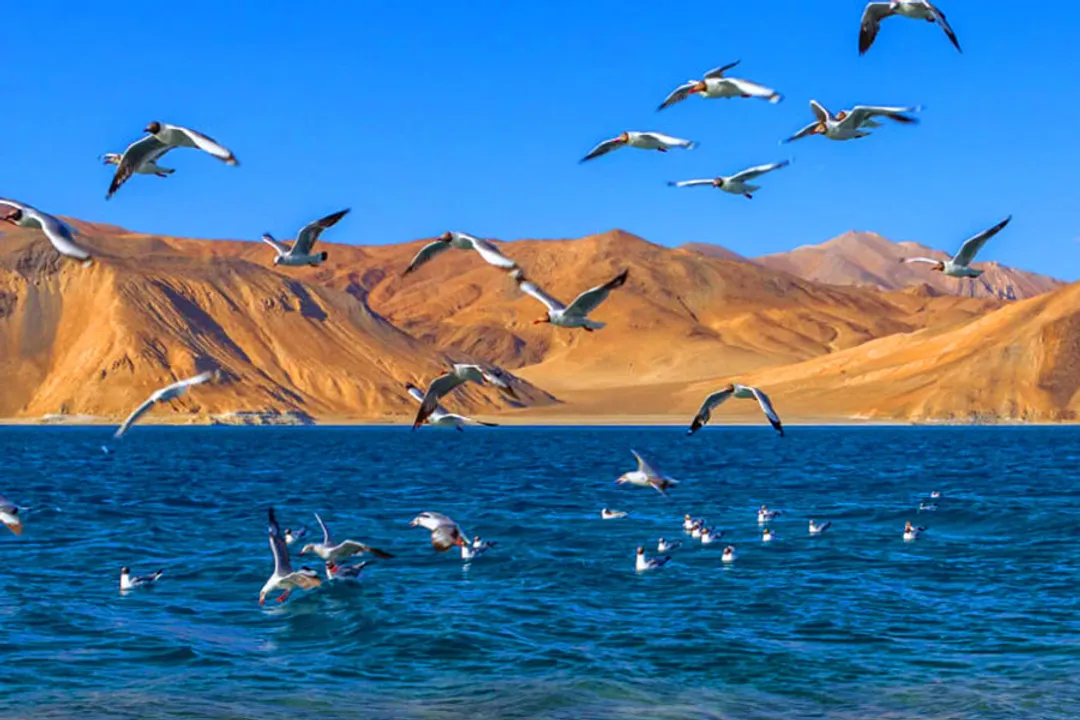
Ladakh, which falls within the Trans-Himalayan Biogeographic Zone, supports a combination of resident and migratory birds adapted to its extreme climatic conditions and high-altitude landscapes.
Of the 197 breeding species recorded, 87 are resident birds that remain in Ladakh throughout the year. The assessment also records 110 winter visitors and passage migrants, 20 winter visitors/summer migrants, 64 passage migrants and 16 vagrant species.
Around 50 species originating from Central Asia and the northern Tibetan Plateau have also been recorded visiting Ladakh, underlining the region’s importance along migratory routes.
Among the species identified in the assessment are the Tibetan Snowcock, Tibetan Partridge, Black-necked Crane, Tibetan Sandgrouse, Himalayan Snowcock, White-browed Tit-Warbler, Brown Accentor and Tibetan Grey-backed Shrike, along with several waterbirds and waders.
65 species of high conservation concern
The assessment identifies 65 species as being of “High Conservation Concern”, including the Yellow-breasted Bushchat, Egyptian Vulture, Steppe Eagle, Pallas’s Fish-Eagle, Saker Falcon, Long-billed Bush Warbler, Common Crane, Black-necked Crane, Eurasian Curlew, Black-tailed Godwit and Ruddy Turnstone.
The Black-necked Crane, an iconic species of Ladakh, receives particular attention in the report. Ladakh is an important breeding area for the species, which depends on specific high-altitude wetland and grassland habitats and is vulnerable to disturbance around its breeding grounds.
Infrastructure, roads threaten habitats
The assessment identifies poorly planned infrastructure development as one of the major pressures on Ladakh’s bird habitats, warning that construction can alter and fragment high-altitude wilderness areas.
It cites the proposed geothermal plant at Puga Hot Spring as an example, noting that the proposed project area provides important habitat for several bird species.
Road construction and associated infrastructure can also increase pressure by opening previously undisturbed areas to greater human activity, the report says.
Tourism doubles in seven years
Growing tourism is another major concern identified in the assessment.
According to the report, the number of tourists visiting Ladakh increased from around 2.5 lakh in 2017 to approximately 5.25 lakh in 2024.
While recognising tourism as an important contributor to the local economy, the assessment says rising visitor numbers can place additional pressure on fragile ecosystems through habitat trampling, waste generation, vehicular movement and disturbance to wildlife.
Exotic plantations and feral dogs add to pressure
The report also flags the ecological impact of exotic tree plantations.
Ladakh is naturally characterised by a largely barren mountain landscape, and the introduction of species such as poplar and willow can alter the ecological characteristics of these habitats and potentially affect native biodiversity, the assessment says.
Feral dogs have also been identified as a serious threat, particularly to ground-nesting birds. According to the report, feral dogs prey on small mammals and birds, putting species such as the Himalayan Snowcock, Chukar Partridge and Black-necked Crane at particular risk.
Climate change threatens migratory habitats
Climate change and global warming are identified as longer-term threats to Ladakh’s mountain ecosystems, glaciers and high-altitude habitats.
Changes in temperature and precipitation, along with variations in glacier and snow cover, wetland availability and seasonal patterns, could affect the habitats and food resources on which birds depend.
The assessment cautions that even relatively small changes in the availability or seasonal timing of wetland resources could have significant consequences for migratory birds.
Protected areas alone may not be enough
Ladakh has several major protected areas, including Hemis National Park, Changthang Wildlife Sanctuary and Karakoram (Nubra-Shyok) Wildlife Sanctuary.
However, the assessment cautions that protected-area status alone may not be sufficient to address all conservation threats.
It notes that some pressures originate outside protected-area boundaries, while activities in surrounding areas can also affect ecological connectivity and wildlife habitats.
The report therefore calls for continued habitat protection, species-level monitoring and careful regulation of developmental and tourism activities to safeguard Ladakh’s distinctive avian diversity and fragile high-altitude ecosystems.