




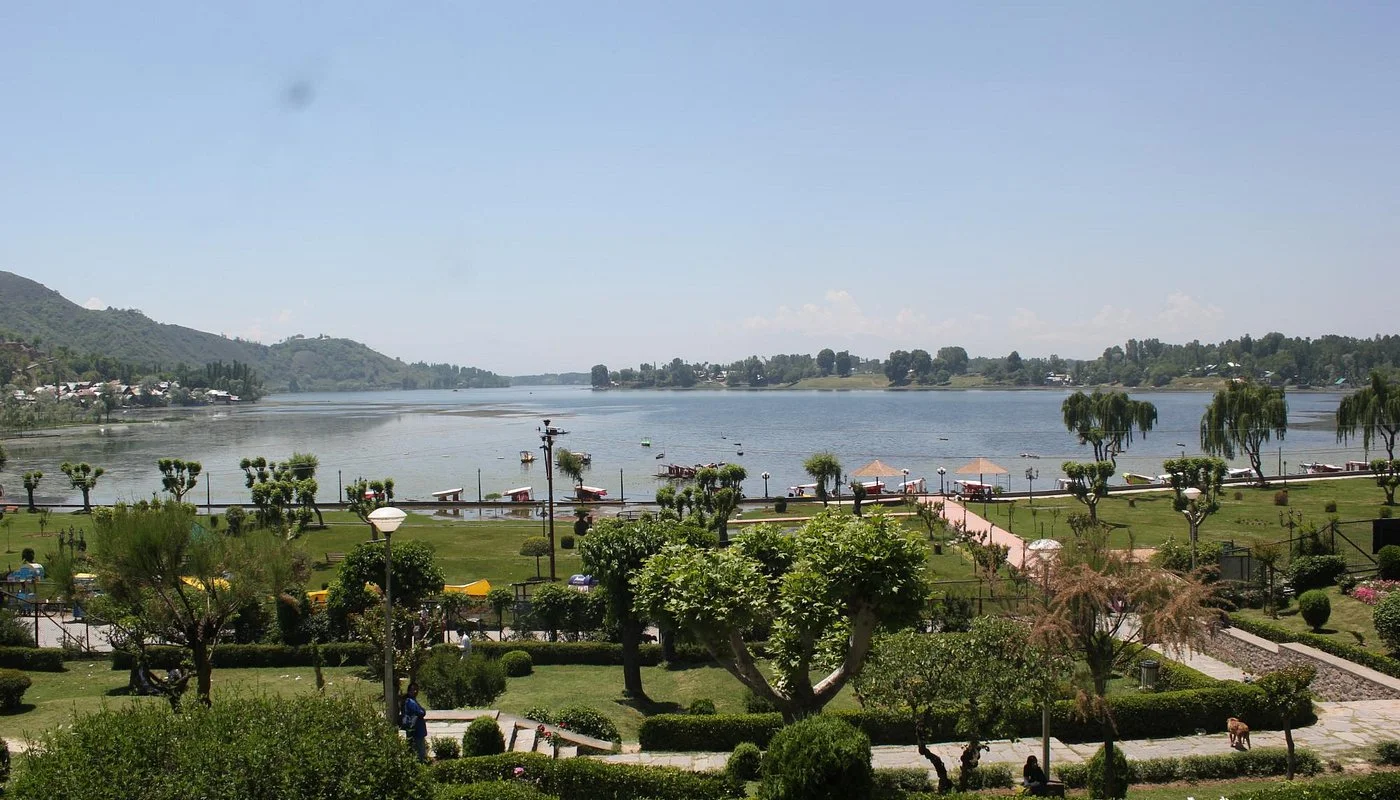
Srinagar, Aug 8: The famous Manasbal Lake in Kashmir’s Ganderbal district is facing serious pollution, with tests by the Central Pollution Control Board (CPCB) detecting faecal contamination, raw sewage and solid waste in its waters, raising concerns over the safety of a key water source for thousands of residents.
The CPCB found that none of the seven water samples collected from Manasbal Lake, nearby springs and the Lar Canal met Class B water-quality standards, meaning the samples did not qualify even for outdoor bathing.
Five of the seven tested locations were categorised as Class D, under which water is considered suitable only for wildlife and fisheries. One spring met Class C standards, meaning the water could be used for drinking after conventional treatment, while another failed to meet the requirements of even Classes A to D.

The samples were collected in April following directions from the National Green Tribunal (NGT), which had ordered the CPCB in January to assess the water quality after a petition by environmental activist Raja Muzaffar Bhat.
The CPCB report detected elevated levels of faecal and total coliform bacteria, indicating contamination from human and animal waste and making the water unsafe for direct consumption. Most heavy metals, however, were found to be below detectable limits.
The report identified the unchecked discharge of untreated wastewater as a major source of pollution. Household wastewater, including grey water, was found flowing directly into the lake, while mixed municipal waste and plastic were being openly dumped along parts of its shoreline, particularly around the Kondabal area.
Wastewater from seven neighbouring villages enters the lake through the Lar Canal, the report said, without treatment or filtration.
Bhat had alleged before the NGT that untreated sewage, including pesticide-contaminated wastewater from 14 villages, was entering Manasbal through the Lar Canal and damaging the lake’s ecology.
He accused authorities of failing to act despite repeated warnings from residents.
“The government claimed a Sewage Treatment Plant (STP) was being set up to protect the lake, but it never came up. This is criminal negligence on the part of authorities as 50,000 to 60,000 people are supplied this same contaminated water for drinking purposes,” Bhat said.
Manasbal Lake is an important freshwater body and serves as a drinking-water source for people in parts of Ganderbal and Bandipora districts, making the CPCB findings a significant public-health concern.
The findings also point to wider ecological stress on the lake, with untreated domestic wastewater, sewage and solid waste continuing to enter the water body through its surrounding drainage network.