


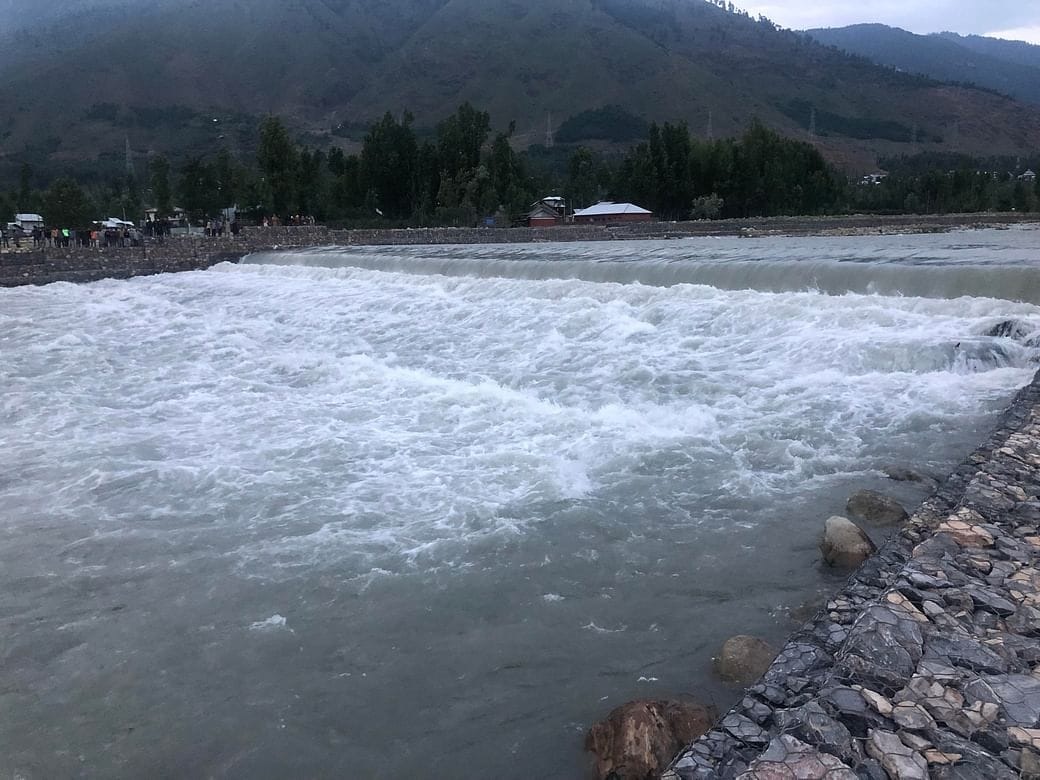
Srinagar, August 27: Untreated sewage entering the Sindh Nallah through four drains is contributing to elevated coliform levels at three locations in Kangan and Sonamarg, the Central Pollution Control Board (CPCB) has told the National Green Tribunal (NGT).
The CPCB, in a report submitted to the Tribunal, said water quality at three river locations failed to meet the prescribed Class B and Class C standards because of high total coliform levels, while contamination was substantially higher in drains discharging directly into the water body.
The most severe contamination was recorded in a drain near Hotel Glacier/Tajwas in Sonamarg, where faecal coliform was measured at 29×10⁷ MPN/100 ml and total coliform at 35×10⁸ MPN/100 ml. BOD levels in the four drains tested by the CPCB ranged from 6 mg/l to 118 mg/l, indicating the presence of untreated sewage.

The CPCB collected 11 samples on May 4, 2026—seven from different points along the Sindh Nallah and four from drains flowing into it.
While all seven river sampling points met the designated Class D standards for the propagation of wildlife and fisheries, three locations—Kangan Akhal Bridge, downstream of Shutkadi Bridge in Sonamarg and Sindh Nallah at Sonamarg—recorded total coliform levels above the limits prescribed for Class B and Class C waters.
The pollution body linked the deterioration primarily to the high faecal coliform concentrations found in the drains discharging into the nallah.
Among the other drains, the one in Kangan recorded faecal coliform of 61×10⁴ MPN/100 ml, while the drain near the Army Transit Camp in Sonamarg recorded 13×10⁵ MPN/100 ml.
Despite the contamination, parameters including pH, dissolved oxygen and biochemical oxygen demand in the river samples remained within prescribed limits.
The CPCB also examined the 1.2 MLD Sewage Treatment Plant (STP) at Sonamarg, finding that installation work was still in progress. Officials of the Sonamarg Development Authority told the inspection team that another two months would be required to complete the work.
The authority had also not obtained the mandatory Consent to Establish (CTE) from the J&K Pollution Control Committee, according to the report.
The CPCB recommended that the J&K Pollution Control Committee direct the concerned agencies to ensure that sewage is treated before being discharged into the Sindh Nallah. It also called for regular monitoring of the water body to prevent further deterioration.
The findings were submitted in ongoing NGT proceedings concerning pollution of the Sindh Nallah and its potential impact on the region’s trout habitat. The case followed a report published by Greater Kashmir in August 2024 titled “Sindh Nallah Polluted Trout Habitat Threatened in Ganderbal”.
The Tribunal had earlier directed fresh sampling after noting that an earlier assessment was based on samples collected in December 2025, when tourist activity in the area was relatively low.
The CPCB subsequently conducted the sampling on May 4 after its proposed April exercise was disrupted by extensive landslides in Jammu and Kashmir.
The matter was listed before the NGT on August 24, 2026.