



Srinagar, Sept 13: For years, protests in Jammu and Kashmir were often directed against decisions that had already been taken by the administration — from smart meters and property tax to recruitment controversies, anti-encroachment drives and changes in reservation policy.
People took to the streets, organised demonstrations and, in some cases, blocked roads, but such protests often had limited impact on the decisions they opposed. Administrative measures largely continued, while protests that escalated were frequently dealt with through the law-and-order machinery.
That political equation appears to have changed since an elected government returned to Jammu and Kashmir.

The nature of protests has increasingly shifted towards demands for higher stipends, pay parity, regularisation and employment-related benefits, with interns, NHM employees, daily wagers and other workers taking their grievances to the streets.
But beyond the nature of the demands, there appears to be another change: the expectation that the government will listen.
The distinction is not necessarily that these grievances are new, or that the present government has resolved them faster. Rather, protesters appear to believe that taking their demands to the streets can bring elected representatives to the negotiating table.
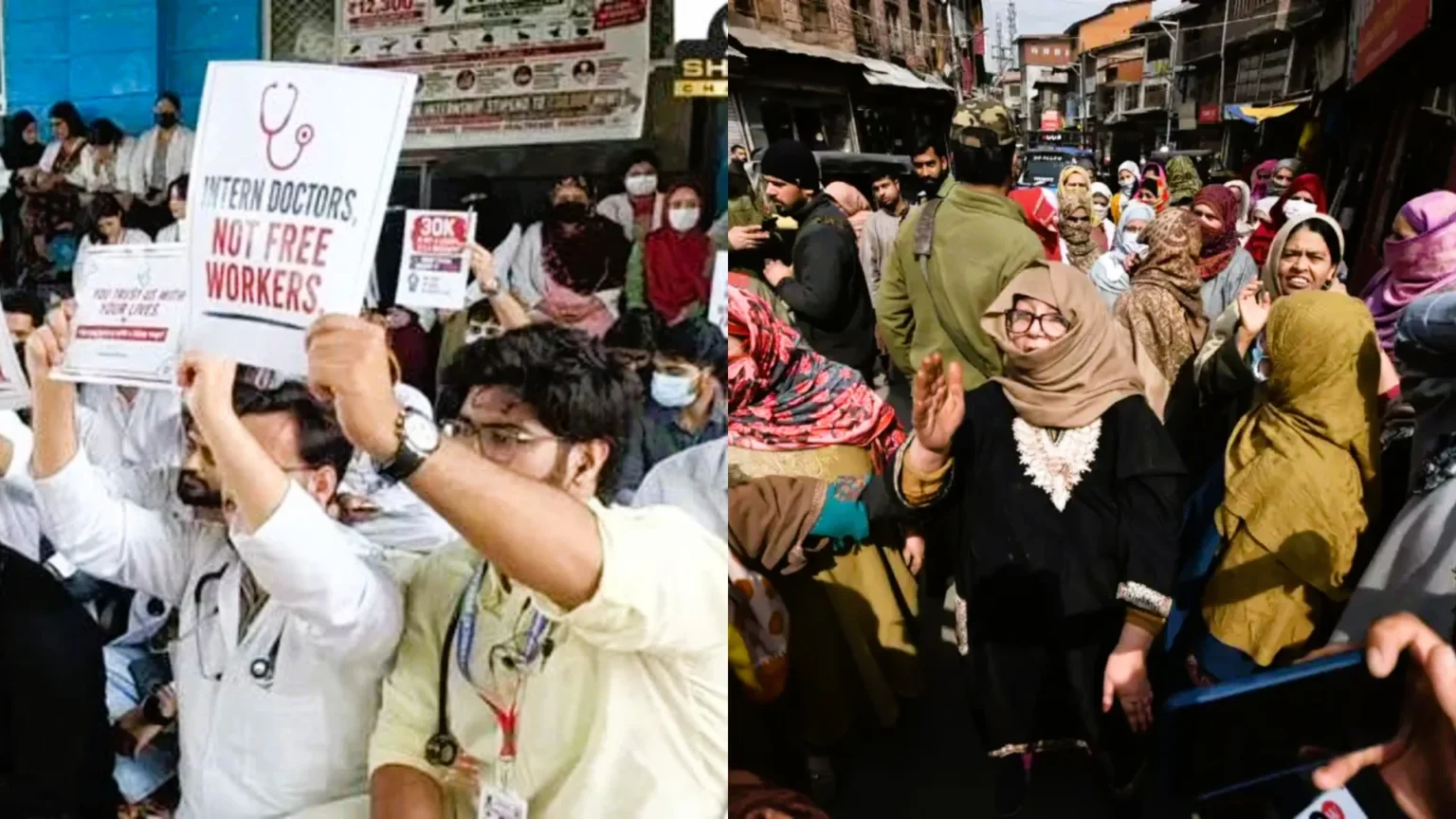
The recent agitation by MBBS and BDS interns offers a telling example.
The interns were demanding an increase in their monthly stipend. After their agitation intensified, a delegation met Health Minister Sakeena Masood Itoo and the government gave a written assurance that the issue would be resolved within a month on the basis of the recommendations of the Stipend Enhancement Committee.
The interns subsequently called off their strike and resumed duties.
The demand itself, however, remains unresolved so far.
Yet the episode demonstrated something important about the changing politics of protest: the agitation produced political engagement.
Soon after the intern doctors’ protest, similar demands for higher stipends emerged from other sections, including veterinary interns. NHM employees and daily wagers have also taken to the streets over pay, employment and service-related issues. In Jammu, some J&K Bank employees too raised the issue of a five-day working week.
The developments raise a broader question: has the return of elected government changed not only how protests are handled in J&K, but also what people expect their protests to achieve?
Political scientist Noor Baba said the Lieutenant Governor continues to retain significant powers under the Union Territory framework, but the nature of the protests being witnessed now is largely different.
“Even though the major power still lies with the LG under the UT system, these current protests are mostly grievance-related and not political,” Baba told The Himalayan Post.
He said people now appeared to distinguish between the elected government and the LG administration in terms of who they expected to address their grievances.
“They see that the elected government is committed to resolving people’s issues, not the LG,” he said.
The pattern was different during the period when J&K did not have an elected government.
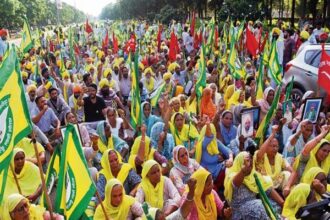
The administration faced protests over the proposed inclusion of Paharis in the Scheduled Tribe list, recruitment and examination controversies, smart meters, property tax and the anti-encroachment drive, among other issues.
The anti-encroachment campaign in 2023, for instance, triggered widespread opposition in Jammu and Kashmir as authorities moved to retrieve state land, including land linked to the scrapped Roshni Act. Markets witnessed shutdowns and protests, while clashes were also reported at some locations.
Similarly, the introduction of smart meters generated sustained public opposition, with demonstrations held in different parts of Jammu and Kashmir. Protesters, including women, objected to the move and raised concerns over electricity bills and affordability.
Recruitment and examination controversies also brought aspirants onto the streets, while the proposed extension of ST status to Paharis triggered strong opposition from sections of the Gujjar-Bakerwal community.
In several such cases, however, the protests were essentially directed against an administrative or policy decision that had already been taken.
The protester was trying to stop something from happening. The administration, meanwhile, had the authority to proceed with the decision.
That dynamic is different from many of the protests being witnessed under the elected government.
Here, the protester is often asking the government to do something — increase a stipend, improve pay, formulate a job policy, regularise employment or change service conditions.
The protest therefore becomes less about opposing an already implemented decision and more about seeking political intervention.
NC spokesperson and Zadibal MLA Tanvir Sadiq said the change reflected greater public confidence in elected representatives.
“People today feel that someone is listening. They have access to their elected government and representatives, can raise issues, and see that their government and MLAs are responsive and available,” Sadiq told The Himalayan Post.
“Earlier, many did not even feel they had the space to raise an issue, leave alone expect a response,” he said.
Sadiq argued that the increase in protests should not automatically be interpreted as declining public confidence in the government.
“So the protests are not necessarily a sign of declining faith; they can also be a reflection of greater faith in representation. People protest because they believe their representatives will hear them and try to act,” he said.
The opposition, however, sees the situation differently.
PDP spokesperson Mohit Bhan, however, said the absence of a major public protest over the power tariff hike should not be seen as public acceptance. He alleged that opposition parties themselves were prevented from protesting against the tariff increase under the present elected government.
“When people’s representatives were not allowed to openly protest against the power tariff, how would you expect people to hit the streets?” Bhan said.
Bhan said the issue was particularly significant because the NC had opposed smart meters and power-related measures while in opposition, but had taken a different position after returning to power.
“We should expect this from an elected government. The power tariff was a big issue. Omar Abdullah’s party, when it was not in power, spoke against smart meters, but the same party, when it came to power, raised the tariffs,” he said.
“Under the LG administration, quelling protests was expected, but not from an elected government,” Bhan said.
The contrasting views point to a larger shift in the politics of dissent in J&K.
Under the LG administration, protests frequently emerged against policy decisions, executive actions or administrative measures. Protesters sought to stop, reverse or modify decisions that were already being implemented, while the administration could rely on its executive authority to carry them forward.
Under the elected government, many protests are centred on unresolved economic and employment grievances. Protesters are not necessarily challenging the government’s authority to take a decision; they are asking the government to intervene on their behalf.
That difference may explain why some groups are willing to take their demands to the streets even when there is no guarantee of an immediate solution.
The calculation appears to have changed.
Earlier, a protest could be seen as an attempt to force an administration to reverse course.
Now, for many protesters, it appears to be a way of getting the government to listen.
That does not necessarily mean grievances are being resolved faster. The demands of interns, NHM employees, daily wagers and others remain to be settled in several cases.
Nor does it mean every protest under the LG administration was ignored or every protest under the elected government resulted in negotiations.
But the emerging difference is in the expectation attached to protest itself.
The return of elected government may not have eliminated grievances in Jammu and Kashmir, but it appears to have changed the calculation surrounding dissent.
The question for protesters is no longer simply whether they can force the government to reverse a decision. Increasingly, it is whether taking to the streets can bring a minister or elected representative to the table.
For the NC government, that creates its own test.
If people increasingly see protest as a credible route to government intervention, assurances can become the beginning of negotiations rather than the end of the matter.
Ultimately, the measure of this new politics of dissent may not be how many protests are called off after meetings or assurances, but how many of the demands behind those protests are eventually resolved.