



SRINAGAR, August 14: Jammu and Kashmir recorded 35 per cent excess rainfall in July, with several districts receiving substantially above-normal precipitation, according to data shared by independent weather platform Kashmir Weather.
The region received 259.7 mm of rainfall against the normal 192.6 mm for July, resulting in an overall surplus of 35 per cent, the data showed.
The sharpest departure in the Kashmir Valley was recorded in Baramulla, which received 165 per cent more rainfall than normal, followed by Ganderbal at 110 per cent and Pulwama at 108 per cent.
More Read

Srinagar and Anantnag each recorded a 71 per cent surplus, while Kulgam was 51 per cent above normal. Bandipora and Kupwara recorded surpluses of 33 per cent and 32 per cent, respectively, while Budgam remained marginally above normal at six per cent.
Shopian was the only Kashmir district to record a rainfall deficit, receiving 40 per cent less rainfall than normal during the month.
The Jammu region also experienced predominantly above-normal rainfall. Ramban recorded the highest surplus at 125 per cent, followed by Udhampur at 108 per cent. Samba and Rajouri registered surpluses of 91 per cent and 88 per cent, respectively.
Poonch received 47 per cent excess rainfall, while Doda and Reasi recorded surpluses of 17 per cent and 14 per cent. Jammu district remained close to normal, with a three per cent surplus.
Kathua and Kishtwar were the exceptions in the region, recording rainfall deficits of 25 per cent and 16 per cent, respectively.
The July figures mark a notable shift in J&K’s precipitation pattern after several months of deficient rainfall, with widespread showers pushing the overall monthly rainfall into surplus despite significant variations between districts.
Ladakh sees sharp percentage departures
Ladakh also recorded substantial departures from its July rainfall normals, although the high percentages were partly influenced by the region’s very low normal rainfall.
In Kargil, 10 mm of rainfall was recorded against a normal of just 1.9 mm, translating into a 426 per cent surplus. Leh received 31 mm against its normal of 11.2 mm, resulting in a 177 per cent surplus.
The data indicated that such large percentage departures in Ladakh should be viewed in the context of the region’s exceptionally low normal rainfall during July.
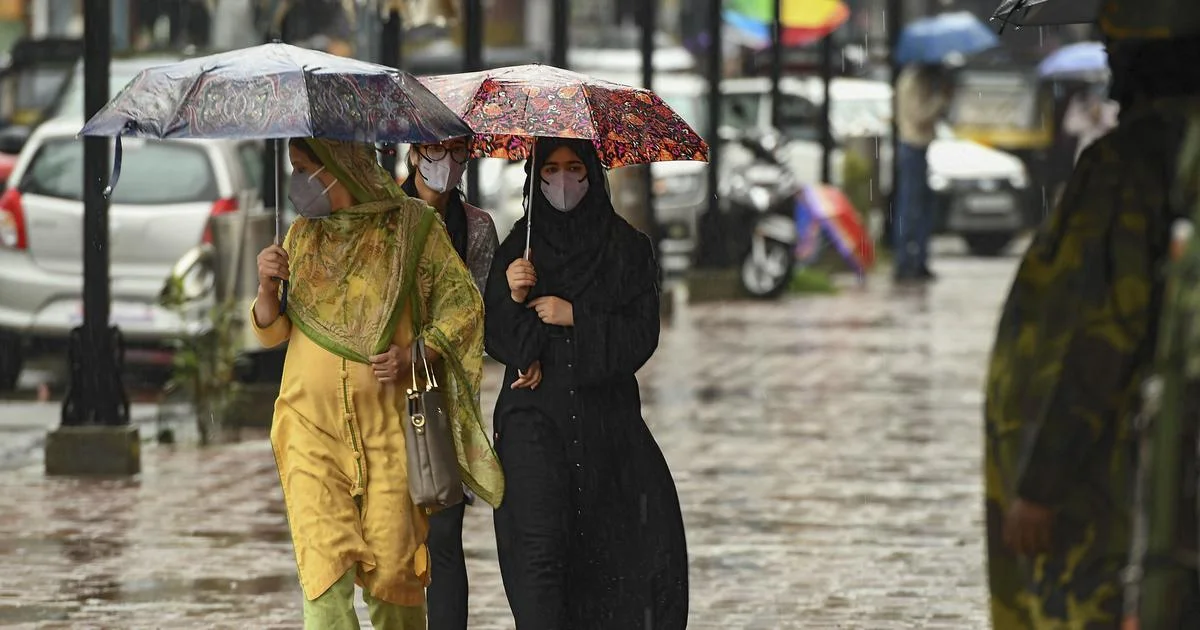
The rainfall figures come amid an active weather spell that has brought heavy showers to several parts of Jammu and Kashmir in recent weeks.
The intense rainfall has also triggered flash floods, landslides and other rain-related incidents in vulnerable areas, underscoring the impact of increasingly wet spells even as rainfall continues to vary sharply across districts.
Read more: Kashmir’s Weather Is Losing Its Old Rhythm — But What Is Actually Changing?