



NEW DELHI, October 11: The Supreme Court on Sunday directed authorities to ensure that peaceful protesters are not illegally detained, public movement remains unhindered in accordance with law, and restrictions imposed across the national capital in connection with the Cockroach Janta Party’s (CJP) October 10 protest are reviewed.
A Bench of Justice Joymalya Bagchi and Justice V. Mohana, during a rare Sunday hearing, also ordered that Delhi Metro and railway services function normally, internet facilities remain undisturbed as per law, and barricades be reviewed immediately in view of law-and-order and traffic requirements.
“There shall not be illegal detention, save and except by procedure established by law, particularly with regard to assemblage of people beyond the area within which it’s imposed,” the Bench ordered.

The court clarified that peaceful assemblies must be permitted in accordance with law, particularly outside areas where prohibitory orders under Section 163 of the Bharatiya Nagarik Suraksha Sanhita (BNSS) are in force.
“Assembly shall be permitted in accordance with law, particularly in respect of peaceful assembly of people beyond the area where Section 163 BNSS is in operation, in accordance with law,” it said.
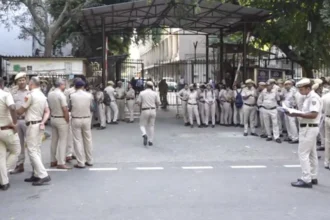
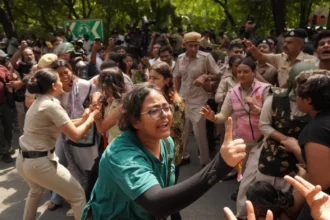
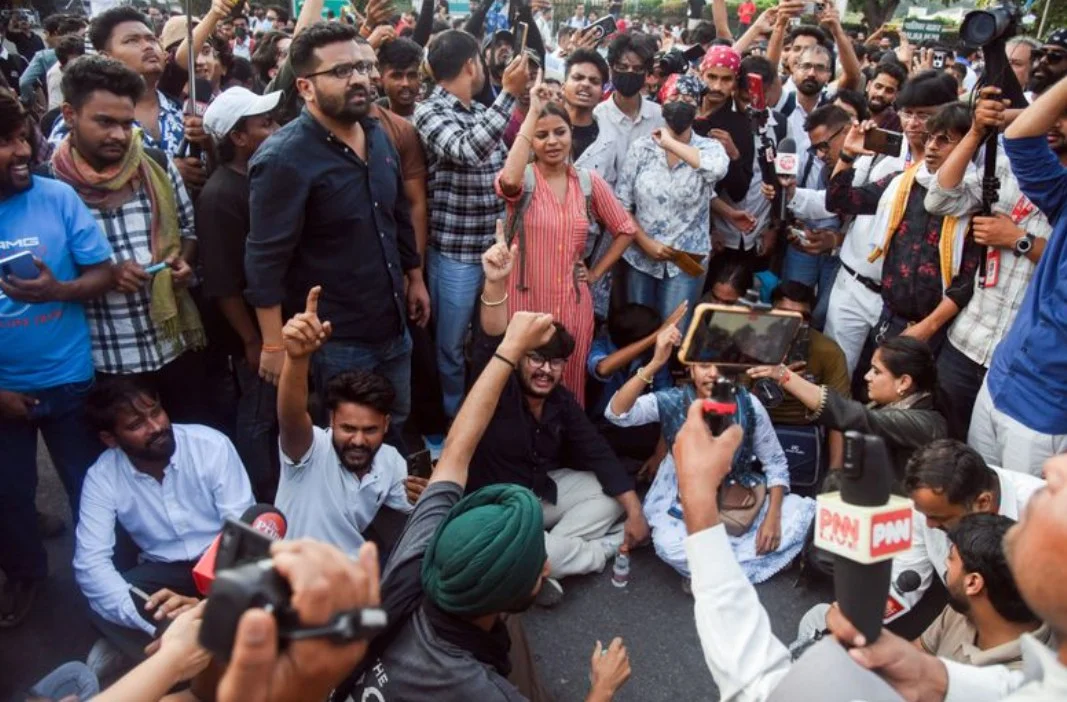
The directions came after several senior advocates raised concerns over alleged police excesses against citizens and lawyers during the CJP’s proposed demonstration against Chief Election Commissioner Gyanesh Kumar.
“We are always at the service of the nation,” the Bench observed during the hearing.
Metro, rail services and internet access
Addressing concerns over restrictions on public transport, the court directed that Delhi Metro and railway services operate normally unless restrictions were necessary to prevent disturbances to public order under Article 19(2) of the Constitution.
“Similarly, free movement of people in the city shall be permitted, subject to traffic regulations. Barricades imposed shall be reviewed,” the order stated.
The Bench directed authorities to assess the need for barricades immediately, keeping in view law-and-order concerns and traffic conditions.
“Internet facilities shall remain undisturbed, as per law,” the court said, while clarifying that it was not curtailing the statutory powers available to authorities.
“We are not taking away the powers (vested in authorities) under the Information Technology Act,” the Bench added.
Solicitor General Tushar Mehta informed the court that internet services had already been restored across Delhi, all Metro stations were open and railway services were operating normally.
Mehta said that of the 303 Delhi Metro stations, entry and exit points at only 45 had been closed on Saturday, and that those restrictions were no longer in place.
He also assured the Bench that lawyers, journalists and other professionals would not be prevented from performing their professional duties.
Court flags restrictions around Supreme Court
The Bench also took note of complaints by lawyers regarding the imposition of prohibitory orders under Section 163 of the BNSS in and around the Supreme Court.
It directed the authorities concerned to remove the notice imposing the restrictions, if this had not already been done, to ensure that citizens and lawyers could access the court without hindrance.
The Supreme Court was hearing a contempt petition filed by advocate Shailendra Mani Tripathi and a habeas corpus petition filed by senior advocate and Trinamool Congress Rajya Sabha MP Menaka Guruswamy.
The petitions followed the restrictions imposed ahead of the CJP’s October 10 protest, which was planned to demand action over allegations of electoral irregularities and seek the resignation of Chief Election Commissioner Gyanesh Kumar.
Senior advocates K.K. Venugopal, Kapil Sibal, Menaka Guruswamy, Gopal Sankaranarayanan, Sanjay Hegde, Shoeb Alam, N. Hariharan, Shadan Farasat and Arundhati Katju, among others, raised concerns over alleged police excesses against protesters and members of the legal fraternity.
Centre asked to respond by Tuesday
The Bench directed the Centre to file a brief response to the petitions and scheduled the next hearing for Tuesday, October 13.
It also allowed all intervention applications, directing that they be taken up on the next date of hearing.
At the conclusion of the proceedings, Justice Mohana emphasised the need for peaceful demonstrations and responsible conduct by protesters.
“If you are seriously interested in public (interest), undertake that you will protest peacefully and you will not instigate people,” the judge said.
The court’s directions seek to ensure that restrictions imposed in the name of maintaining public order do not unnecessarily obstruct peaceful assembly, public transport, internet access or the ability of citizens and legal professionals to access justice.