



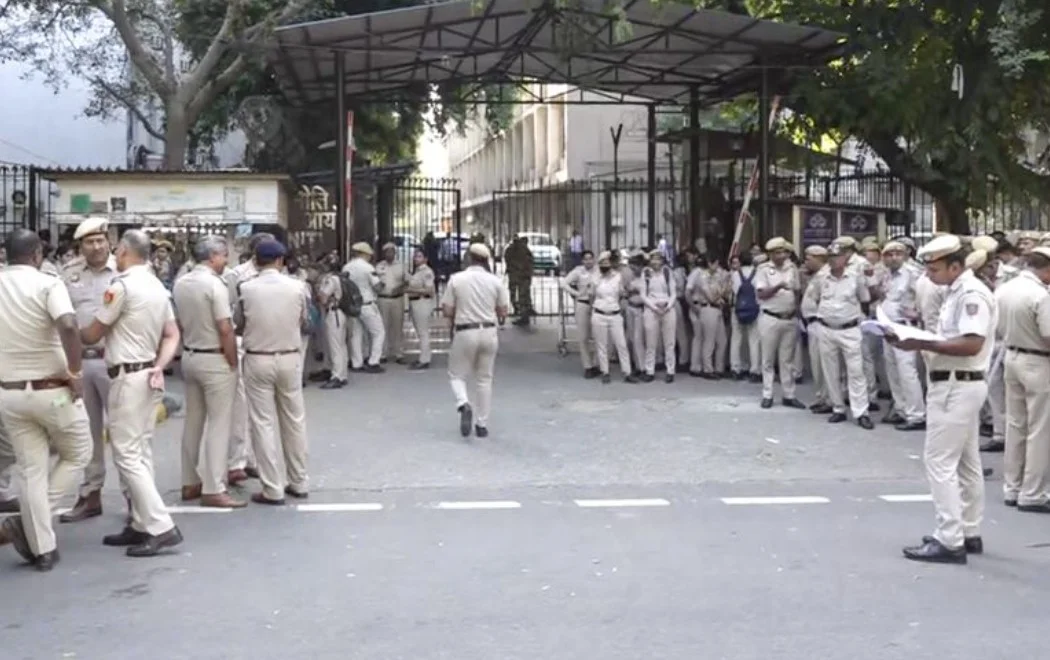
New Delhi, Oct 6: Security was tightened across central Delhi on Tuesday ahead of a planned march by INDIA bloc MPs to the Election Commission of India (ECI) headquarters over the Special Intensive Revision (SIR) of electoral rolls and their demand for the removal of Chief Election Commissioner Gyanesh Kumar.
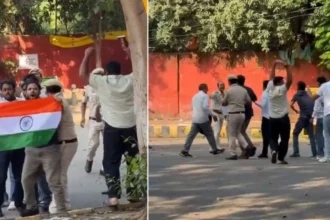
Around 4,000 Delhi Police and Central Armed Police Forces personnel have been deployed across the New Delhi district, while multiple layers of barricading have been put in place at key locations along the proposed route.
Rapid Action Force (RAF) personnel were deployed around Akashvani, Vijay Chowk and other sensitive points, with police maintaining a heightened presence to regulate movement and prevent any untoward incident.
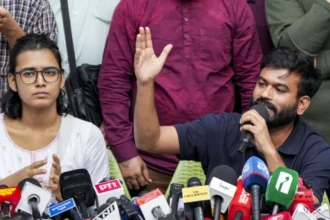
The opposition MPs have been asked to assemble at Makar Dwar at 10:30 am, with the march scheduled to begin at 11 am from Parliament towards Nirvachan Sadan, the ECI headquarters. Congress leader Jairam Ramesh said the march would be peaceful.
“At 11 AM (Tuesday), MPs of all opposition parties will march peacefully from Parliament House to the Election Commission,” Ramesh said.
The march is part of the INDIA bloc’s broader campaign against alleged irregularities in the SIR exercise and electoral rolls, with opposition parties also seeking Kumar’s removal.
Security has also been strengthened around Jantar Mantar, where prohibitory orders under Section 163 of the Bharatiya Nagarik Suraksha Sanhita are in force. Traffic restrictions and diversions have been announced around Connaught Place, Patel Chowk, Parliament Street, Ashoka Road, Jantar Mantar Road and adjoining areas.
The protest comes a day after the Supreme Court clarified during a hearing that it had not approved any modified version of Form 6, used for voter enrolment during the SIR process. Chief Justice of India Surya Kant said, “Any modified Form 6 has not been approved by us.”
Meanwhile, the INDIA bloc has announced further protests as part of its campaign, including district-level padyatras through October 8 and subsequent block- and state-level programmes.