




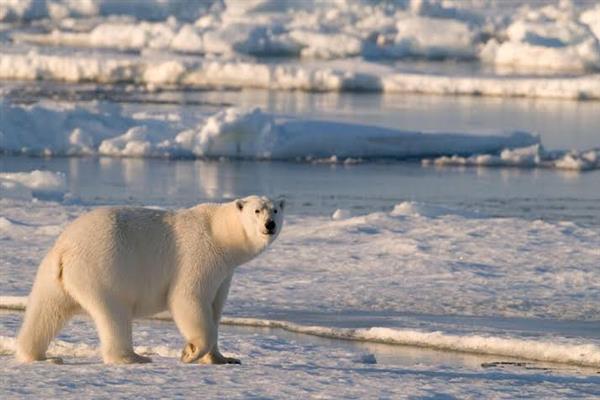
Earth’s polar regions Artic and Antartica have been witnessing record breaking heatwaves since March of this year.
The polar regions made international headlines when unprecedented heatwaves were recorded in mid-March of this year.
The Temperatures are rising 30 to 40 degrees Celsius (54-72F) above average in both of the polar regions, Arctic and Antartica.
On March 18, the Concordia research station – located 3,200 metres (10,500 feet) above sea level in the heart of Antarctica – registered an all-time high of -11.8C (110.8F), 40C above seasonal norms, according to a report by AJ.
Moreover, some parts in the Arctic region warmed 30C above average with scientists worried about the increasing intensity of polar heatwaves.
The rising heat are alikely responsible for collapse of Conger ice shelf which is made of interlinked ice sheets covering 1,200sq km (463.3sq miles) of sea on the edges of East Antarctica.
Although it had been shrinking since the mid-2000s, the heat wave was likely the “final straw” for Conger, associated scientists predict.
Further collapses could let huge glaciers plunge into the water, which would have a much greater impact on global sea levels.