



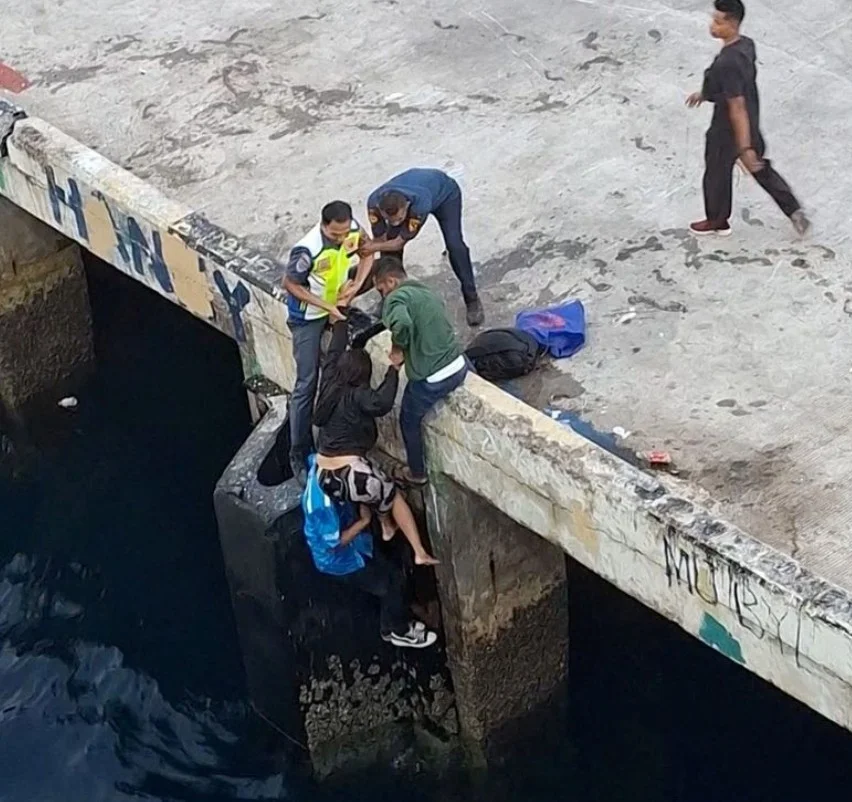
FLORES, Indonesia: Rescue teams dug through collapsed buildings and landslide debris Sunday in eastern Indonesia as they searched for survivors and bodies a day after a powerful earthquake struck Flores island, killing at least 47 people and injuring more than 100.
At least 24 people were killed in Manggarai regency and 17 in neighbouring East Manggarai, while additional fatalities were reported in Sikka, Ngada and Ende regencies, Indonesia’s National Disaster Management Agency said.
The earthquake destroyed more than 900 homes and damaged nearly 450 others, forcing about 5,000 people into temporary shelters. At least 167 public facilities, including schools, health centres and churches, were also damaged.

Rescuers resumed operations in areas that remained inaccessible after landslides blocked roads and isolated villages across six regencies on Flores, a predominantly Catholic island in Muslim-majority Indonesia.
“We have cleared most landslides and reopened roads to previously isolated villages, although communication disruptions and power outages continue to hamper search efforts,” said Fathur Rahman, head of the Search and Rescue Office in Maumere, the capital of Sikka regency.
He said rescue teams were concentrating on collapsed homes and other buildings where people could still be trapped.
The US Geological Survey said the magnitude 7.7 earthquake struck about 68 kilometres north-northwest of Ende in East Nusa Tenggara province. The quake occurred at a depth of about 10 kilometres offshore and sent residents fleeing in panic across Flores. Tremors were also felt in neighbouring West Nusa Tenggara and parts of southern Sulawesi.
The disaster left thousands of residents reluctant to return to damaged homes because of fears of strong aftershocks.
“The shaking was terrifying, so intense that my house nearly collapsed,” said Anastasia Imad, a farmer in Labuan Bajo, as she spoke from a makeshift green tent beside her damaged home. “We feared the aftershocks would bring it down on us while we slept.”
Relief teams have begun distributing rice, ready-to-eat meals, drinking water, blankets and medicine, while emergency shelters are being established for displaced residents.
Authorities said restoring electricity and communications and reaching remote communities cut off by landslides were among the biggest challenges facing the relief operation.
The earthquake also affected Labuan Bajo, the gateway to Komodo National Park and one of Indonesia’s major tourist destinations. Landslides blocked sections of the Trans-Flores Highway, a roughly 700-kilometre road that connects communities across the mountainous island.
Many residents continued sleeping outdoors as a precaution.
Indonesia, an archipelago of more than 17,000 islands, is highly vulnerable to earthquakes and volcanic eruptions because it lies along the Pacific “Ring of Fire”, a horseshoe-shaped zone of seismic faults and volcanoes.
Flores has suffered major disasters before. A powerful earthquake and tsunami in 1992 killed about 2,500 people on the island.
In 2018, a magnitude 7.5 earthquake triggered a tsunami in Sulawesi, killing more than 4,400 people. In 2004, a magnitude 9.1 earthquake off Sumatra generated a massive tsunami that killed about 230,000 people across a dozen countries.