




Riyadh, September 15: Yemen’s Iran-aligned Houthi forces launched a fresh wave of missile and drone attacks on Saudi Arabia as their forces consolidated positions along Yemen’s Red Sea coast, escalating tensions in a conflict that is already threatening vital oil supplies and transport routes.
The attacks came as Gulf Arab states postponed planned talks with Iran, raising concerns that the conflict could widen further and complicate efforts to ease a blockade of the Strait of Hormuz, through which a significant share of the world’s oil has traditionally passed.
The Houthis said on Monday they fired dozens of missiles and drones at a military airbase in Khamis Mushait in southern Saudi Arabia, targeting aircraft hangars, radar systems, runways and ammunition depots. They said the attacks were in retaliation for Saudi airstrikes on Houthi targets in Yemen.

Saudi authorities issued emergency alerts in Khamis Mushait and three other southern cities. Thirteen civilians were wounded in the Houthi attacks, according to the Saudi-led coalition in Yemen.
The escalation follows a rapid Houthi advance in western Yemen, including the seizure of Perim Island at the entrance to the Red Sea, according to officials from Yemen’s internationally recognised government.
Saudi and Yemeni government forces have intensified airstrikes against Houthi positions, including around the historic Red Sea port of Mocha. However, Yemeni officials said the Houthis continue to maintain effective control over most of the country’s western coastline along the Red Sea.
“The Houthis are being put under heavy pressure. They in turn are putting more and more pressure on the Saudis, increasing their campaign of missile and drone attacks,” one Yemeni official said.
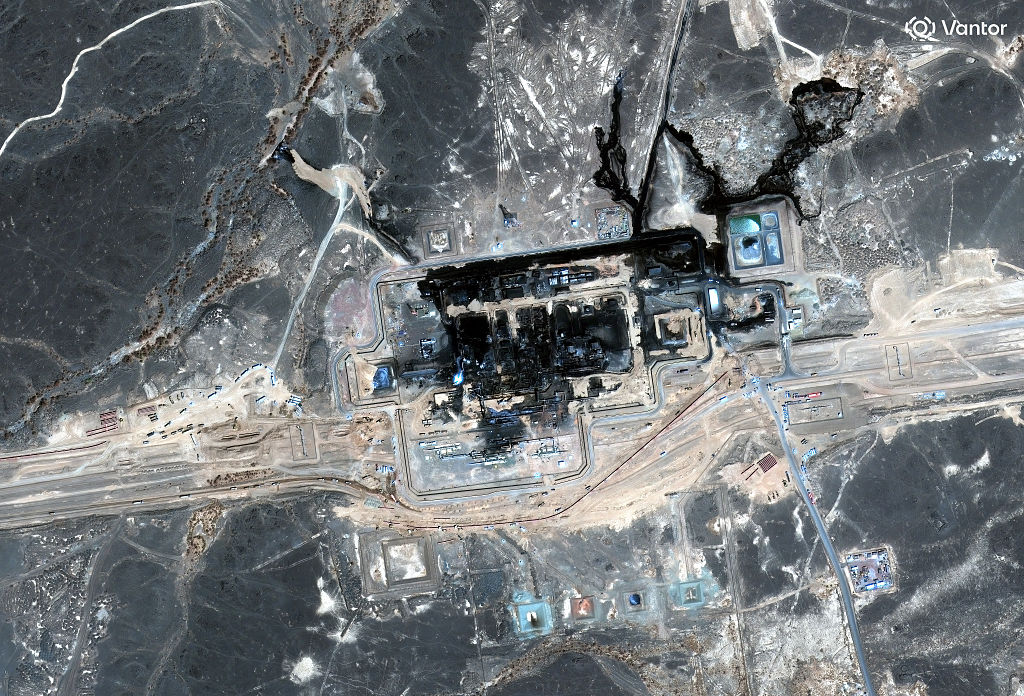
The latest escalation has added to pressure on Saudi Arabia’s oil exports after an attack last week knocked the kingdom’s East-West Pipeline offline.
Riyadh blamed that attack on Iranian-backed militias in Iraq. The 1,200-kilometre pipeline, which runs from Saudi Arabia’s Gulf coast to the Red Sea, was built in the 1980s to provide an alternative route for exporting oil when the Strait of Hormuz comes under threat.
Traders have warned that a prolonged shutdown could put up to 4% of global oil supply at risk while the Strait of Hormuz remains largely blocked. Saudi Arabia has not said when the pipeline will resume operations.
Oil prices rose on Tuesday amid the growing supply concerns. Brent crude futures were trading around $105.89 a barrel, while US West Texas Intermediate stood at about $102.29.
“Fresh attacks by the Houthis targeting Saudi Arabia may be influencing oil market investors’ expectations about the severity and duration of the conflict,” said Hamad Hussain, senior climate and commodities economist at Capital Economics.
Goldman Sachs said the latest attack could threaten Saudi Arabia’s remaining exports through Yanbu, with repair estimates ranging from “very soon” to eight weeks.
The investment bank said the attacks on energy infrastructure represented a meaningful escalation and increased the possibility of Brent crude rising above $120 a barrel under a prolonged disruption scenario.
Hussain said that if the East-West Pipeline remained closed for several weeks without additional supplies or reduced demand, Brent could rise towards $130 a barrel.
Meanwhile, vessel traffic through the Strait of Hormuz has fallen sharply. Preliminary data from Kpler showed only four commercial vessels passed through the strategic waterway on Monday, compared with 10 a day earlier.
The disruption has also affected shipping beyond the Gulf. Oman’s Maritime Security Centre said Tuesday that the Panama-flagged oil tanker El Gaia was being towed to an Omani port after a fire broke out in its engine room following an attack.
The wider conflict is also affecting fuel supplies in Russia. Reuters calculations based on data from fuel-market participants showed that half of Russia’s six largest diesel-producing refineries had significantly reduced or halted production in September after sustaining damage in drone attacks.
The United States has so far resisted Saudi requests for direct military intervention beyond intelligence support, according to three sources cited by Reuters. US President Donald Trump said over the weekend that he had spoken with Saudi Crown Prince Mohammed bin Salman and that the Houthis had also contacted Washington, urging it to stay out of the conflict.
Saudi state media reported that Crown Prince Mohammed met US regional commander Admiral Brad Cooper in Jeddah on Monday to discuss developments following the Houthi escalation.
Saudi Arabia has led a coalition fighting the Houthis since 2015. The conflict had largely subsided under a ceasefire in recent years, but fighting reignited this month as Houthi forces pushed back forces aligned with Yemen’s internationally recognised government.
With Houthi attacks continuing, Saudi Arabia facing disruption to a key oil-export route and diplomatic efforts over the Strait of Hormuz stalled, concerns are growing that the latest escalation could further destabilise the region and put additional pressure on global energy markets.