




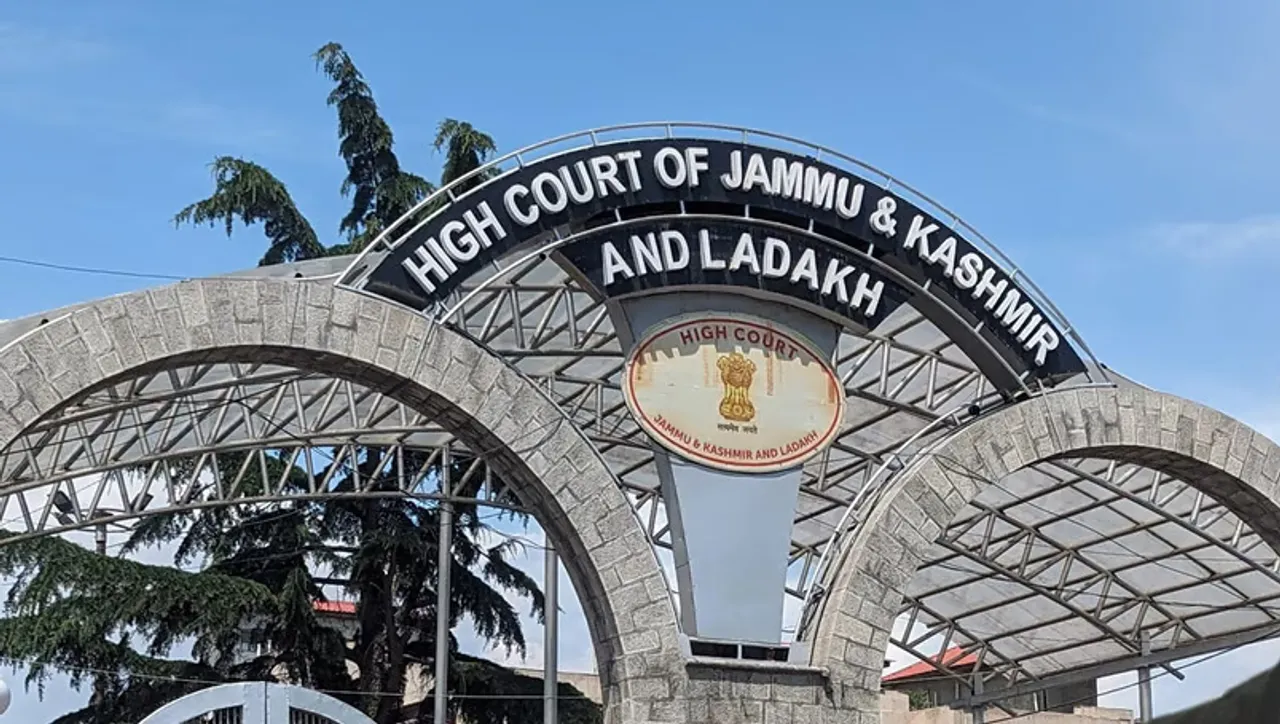
Srinagar, September 2: The Jammu and Kashmir and Ladakh High Court has quashed the dismissal of a senior Jammu and Kashmir Bank officer who was removed from service over allegations of involvement in “terrorist/anti-national activities”, holding that the bank had failed to establish the circumstances required to dispense with a departmental inquiry.
Justice Sanjay Dhar, while setting aside the dismissal order passed against Deputy General Manager Saadut Hussain Pampori, said that terminating an employee without an inquiry was a serious measure that could be resorted to only in exceptional circumstances.
“Dismissal of an employee from service without holding an inquiry is a drastic step, which has to be taken only in rare and appropriate cases,” the court said in its order passed on August 29.
More Read

Pampori had been placed under suspension in April 2024 pending an investigation into alleged misconduct. A few months later, the bank invoked Clause 12.29 of its Officers Service Manual (OSM) and dismissed him without conducting a departmental inquiry.
The dismissal order alleged that Pampori was involved in “terrorist/anti-national activities”.
Challenging the action before the High Court, Pampori argued that no FIR had been registered against him and that no investigation had been conducted by any State, Union Territory or Central investigating agency into the allegations.
He contended that, in the absence of an investigation establishing his alleged involvement in terrorist or anti-national activities, the bank could not have invoked Clause 12.29 to dismiss him without an inquiry.
The bank, however, argued that the provision permitted such action when advice was received from the competent government authority.
“Once advice is received by the respondent-Bank from the competent authority of the Government regarding dismissal or removal of an employee, such employee has to be terminated or removed from the services of the Bank,” the bank submitted.
The High Court, however, found that the requirements for invoking the provision had not been fulfilled in Pampori’s case.
“In the absence of any investigation with a finding about involvement of the petitioner in anti-national activities, etc., it was not open to the Managing Director and CEO of the respondent-Bank to issue the impugned order dismissing the petitioner from service,” the court held.
“It is, thus, clear that the respondents have passed the impugned order without satisfying themselves about fulfilment of the requirements contemplated under Clause 12.29 of the OSM,” it added.
The court consequently held that the dismissal order was “not sustainable in law” and quashed it.
The ruling does not, however, prevent the bank from taking further action against Pampori.
The High Court said the bank could follow the procedure prescribed under Clause 12.29 of the OSM and pass a fresh order. It also said the bank could proceed with a departmental inquiry against him, which had already been contemplated after his suspension.
“Alternatively, it shall also be open to the respondent-Bank to proceed ahead with the departmental inquiry against the petitioner,” the court said.
The court further noted that Pampori had not challenged his original suspension order. With the dismissal now set aside, the suspension order would therefore stand revived.
Wider crackdown
The judgment comes amid a wider crackdown by the Jammu and Kashmir administration against government employees accused of links with militancy, separatism or other activities considered prejudicial to national security.
In a number of cases, employees have been dismissed under Article 311(2)(c) of the Constitution, which allows the government to dispense with a regular inquiry where the President or Governor is satisfied that holding such an inquiry is not expedient in the interest of national security.
The High Court’s ruling in Pampori’s case, however, turned on the specific requirements of the J&K Bank’s service rules and the circumstances in which the bank sought to invoke them.