



New Delhi, Aug 26: India on Wednesday rejected as “politically motivated” and “highly malicious” observations made by a UN racial discrimination watchdog, which raised concerns over alleged rights violations by law-enforcement personnel and the treatment of ethnic and ethno-religious communities, including Rohingya and Bengali-speaking Muslims.
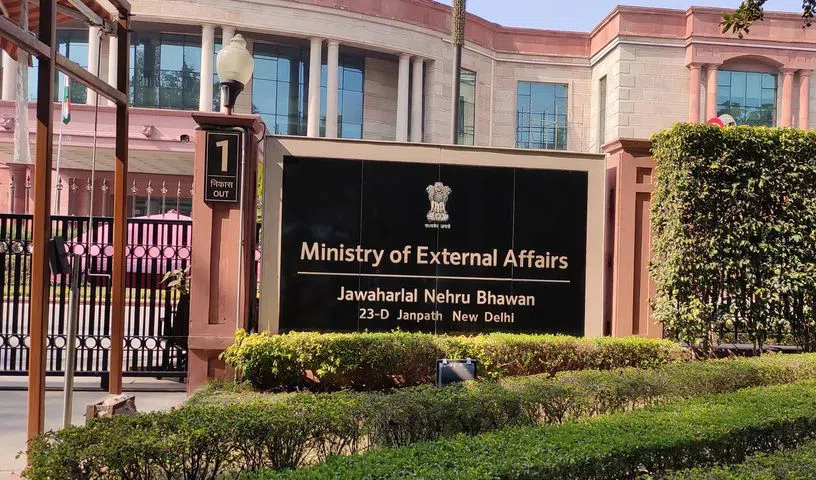
The Ministry of External Affairs (MEA) said the observations of the UN Committee on the Elimination of Racial Discrimination (CERD) contained “sweeping generalisations” and “unsubstantiated allegations”, while accusing the panel of tending to exceed the mandate of the International Convention on the Elimination of All Forms of Racial Discrimination.
“India rejects any politically motivated highly malicious references in the report with all the contempt that it deserves,” the ministry said.

The sharp response followed CERD’s concluding observations issued on Tuesday after its review of India’s implementation of the Convention. The committee said it was “gravely concerned” by reports of large-scale violations allegedly perpetrated by law-enforcement officials against ethnic and ethno-religious groups, Indigenous and Tribal Peoples, Scheduled Tribes, Scheduled Castes, particularly Dalits, and non-citizens.
According to the UN findings, the alleged violations included racially motivated violence, excessive use of force, extrajudicial killings, arbitrary and prolonged detention without due process, torture, ill-treatment and sexual violence. The committee called on India to ensure prompt, thorough and impartial investigations into such allegations and accountability for those responsible.
Kashmir reference
The committee specifically referred to the situation following the April 2025 Pahalgam attack in Kashmir, saying there had been an increase in law-enforcement operations targeting Rohingya, Bengali-speaking Muslims, migrants and asylum-seekers, particularly following a 2017 Ministry of Home Affairs order and the attack.
It also raised concerns over police stops and identity checks involving alleged racial profiling, saying such practices had reportedly resulted in arbitrary arrests and detention without due process, as well as torture and ill-treatment.
CERD further expressed concern over deportations and forcible returns of people in need of international protection, saying these could violate the principle of non-refoulement. It called on India to urgently address discrimination, hate speech and hate crimes against Rohingya, Bengali-speaking Muslims, migrants and asylum-seekers, refrain from collective expulsions and ensure access to international protection.
NRC, Bengali-speaking Muslims
The committee also criticised the implementation of the National Register of Citizens (NRC) in Assam, raising concerns that Bengali-speaking Muslims were subjected to what it described as “systematic and structural racial discrimination”.
It called for the NRC to be suspended and for India to review the legislative framework governing the process. The committee also raised concerns about the impact of electoral-roll revision exercises on Bengali-speaking Muslim voters in West Bengal and Assam.
CERD additionally expressed concern over the lack of disaggregated data on Indigenous and Tribal Peoples, ethnic and ethno-religious groups and non-citizens, including migrants, refugees, asylum-seekers and stateless persons.
India rejects observations
Responding to media queries on the CERD press release following India’s 11th periodic review under the International Convention on the Elimination of All Forms of Racial Discrimination, the MEA said India had participated in the review in a “spirit of constructive engagement” and reaffirmed its commitment to combating racial discrimination.
“During the review, we highlighted India’s constitutional safeguards, robust legal framework, pluralism and sustained efforts to protect disadvantaged communities,” the ministry said.
The MEA said an inter-ministerial delegation led by Solicitor General Tushar Mehta had already rejected the committee’s observations during the review.
“While we will respond to the Committee’s observations through the established procedure, the inter-Ministerial delegation, which was led by the Solicitor General of India, Shri Tushar Mehta, had already rejected the sweeping generalisations, unsubstantiated allegations, or tendency to exceed the Convention’s mandate during the review meeting,” it said.
India also disputed the committee’s approach to caste and religious issues during the review, while CERD maintained that its mandate covers discrimination based on inherited status, including caste, under its interpretation of the Convention.
The review marked India’s return to dialogue with CERD after 19 years, with the previous review having taken place in 2007. The committee said the renewed engagement was welcome but noted that the long gap had deprived India and people under its jurisdiction of the opportunity for continuing dialogue and follow-up on earlier recommendations.
The MEA said India would respond to the committee’s observations through the established procedure, while the Indian Mission in Geneva has also issued a detailed statement following the review.
CERD is a UN treaty watchdog responsible for examining whether countries are meeting their international obligations to prevent and eliminate racial discrimination.