



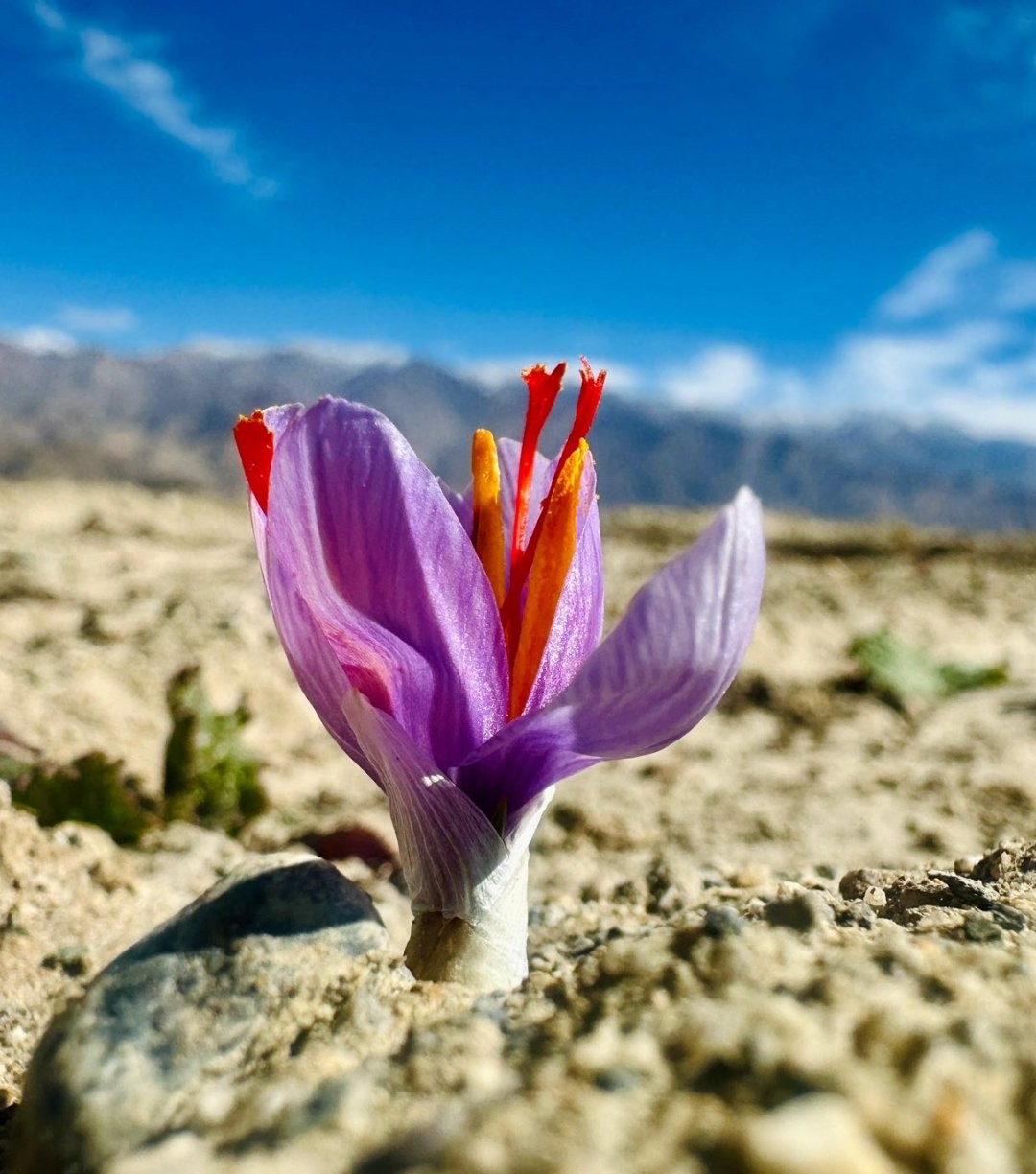
Leh, Nov 2: Saffron cultivation on previously barren land in Leh has produced its first blooms within 30 days of plantation, with the Ladakh administration viewing the early results as a potential breakthrough for high-altitude agriculture and a possible avenue for commercial production.
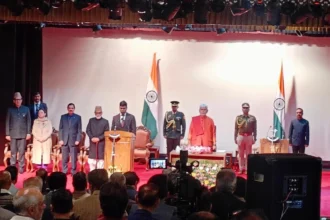
Lieutenant Governor VK Saxena witnessed the first bloom during an inspection of the experimental saffron field on Sunday, where officials reported an average of 20 to 25 flowers blooming daily. As many as 72 flowers were recorded on Sunday morning alone, while nearly 22 grams of pure saffron have been collected over the past four days.
The experimental cultivation has been undertaken under Project Him Sarovar on recently restored degraded land in Leh. According to an official spokesperson, around 90,000 premium Iranian saffron corms, weighing nearly 800 kg, were planted across approximately 4,000 square metres.

“The plantation was undertaken on October 1, and the first blooms have been reported in less than 30 days,” the spokesperson said, adding that the results were encouraging compared to the usual flowering period of nearly two months.
The initiative is aimed at diversifying agricultural practices in Ladakh, improving farmers’ income and creating livelihood opportunities for local youth, Self-Help Groups and entrepreneurs.
The spokesperson said the saffron experiment builds on earlier initiatives in high-value floriculture, particularly the cultivation of Lilium and Gladiolus in Leh, which have created new avenues for employment and income generation.
Describing the development as evidence of the potential of high-altitude farming, the spokesperson said the pilot project could provide a foundation for commercial-scale saffron production in the region.
“This remarkable achievement is a powerful testament to the resilience of the local environment and highlights the immense, untapped potential of high-altitude farming in the Ladakh region,” he said.
He added that the experiment could open new opportunities for crop cultivation and agro-based entrepreneurship, contributing to a stronger and more self-reliant local economy.
Saffron, one of the world’s most expensive spices, commands premium prices in domestic and international markets, making it a potentially lucrative alternative for farmers. Its cultivation in Ladakh, however, remains at an experimental stage, with the administration assessing the crop’s adaptability to local climatic conditions and its long-term commercial viability.
Jammu and Kashmir accounts for approximately 90 per cent of India’s saffron production and remains the country’s leading saffron-producing region.
The Lieutenant Governor also appreciated the Agriculture Department officials and field staff for their role in implementing the experimental project.