


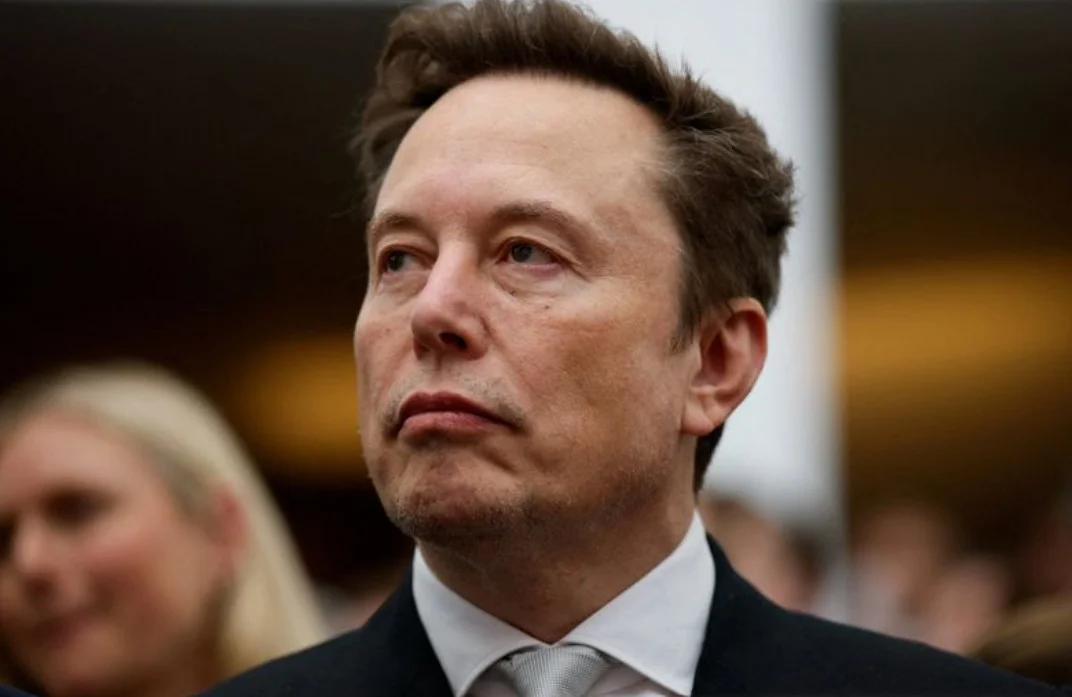
NEW DELHI, Oct 10: Elon Musk on Saturday escalated his criticism of Reliance Industries chairman Mukesh Ambani over delays in the launch of his Starlink satellite internet service in India, sharing media reports alleging links between Reliance-backed entities and political campaigning for the BJP.
The latest post on X came hours after Musk sarcastically addressed Ambani as the “real boss of India” and accused him of seeking to protect a monopoly in the country’s satellite communications market.
Musk shared a 2022 Al Jazeera report titled How a Reliance-funded firm boosts BJP’s campaigns on Facebook and an archived 2024 report by The Indian Express concerning Qwik Supply, a Reliance-linked company that reportedly donated Rs 385 crore to the BJP and Rs 25 crore to the Shiv Sena through electoral bonds.
More Read
The posts intensified the public dispute over the entry of Starlink into India, where Musk has alleged that powerful business interests are seeking to prevent competition in the satellite internet sector.
Reliance has not publicly responded to Musk’s latest allegations. The government, meanwhile, has maintained that India’s authorisation framework for telecommunications and satellite services is fair and non-discriminatory, describing suggestions of selective treatment as baseless and misconceived.
‘Would you allow Starlink to compete?’
In a post on X late Friday, Musk addressed Ambani as “Prime Minister Ambani” and questioned whether he would allow Starlink to compete with his company’s satellite internet operations in India.
“Dear Prime Minister Ambani, Please accept my humble apologies for not realising that you are the real boss of India. Naturally, you would prefer to maintain your monopolistic exploitation of the great people of India, but would you nonetheless consider allowing Starlink to compete?” Musk wrote.
He argued that large parts of India still lack internet access, limiting educational opportunities for children and preventing small businesses from reaching global markets.
Starlink, he said, could improve access to connectivity and help bridge the digital divide.
In a subsequent post, Musk said Starlink had proved essential in saving lives during natural disasters around the world when other communication systems failed.
“So you would also be helping save men, women and children throughout India,” he added.
Musk had earlier questioned the prolonged delay in Starlink’s entry into the Indian market, claiming that the company had spent five years complying with government requirements.
“Starlink is licensed in over 165 countries and has spent five years complying with every single law and requirement of the government of India, so why still no license?” he wrote in an earlier post on X.
Centre rejects monopoly concerns
Communications Minister Jyotiraditya Scindia on Friday asserted that India does not permit monopolies in any sector and that companies seeking to provide satellite communication services must meet the prescribed regulatory and security requirements.
Speaking on the sidelines of the India Mobile Congress in New Delhi, Scindia said the government’s approach was technology-neutral and intended to give consumers a choice of services and providers.
“Let me set the record straight. For us, the Department of Telecommunications, we are technology agnostic,” he said.
“Our job is to be able to provide the bouquet of services to every single customer. It is for the customer to choose in a free market which service he or she prefers, and within that service bouquet, which company’s service he or she prefers,” the minister added.
Scindia said three entities had secured satellite communication licences: Musk’s Starlink, Reliance Jio’s satellite venture Jio Satcom and Bharti-backed Eutelsat OneWeb. Amazon’s Project Kuiper has also expressed interest and would have to follow the established regulatory process.
He said the companies could begin operations after the government finalised the spectrum assignment framework and they individually fulfilled the required security conditions.
“We are very clear on our stand. There are three parties that have got a licence; as and when the government decides the charge system on the revenue basis, that spectrum will be assigned to them, and as and when they individually fulfil the security conditions, they can start operations,” Scindia said.
He added that the Telecom Regulatory Authority of India (TRAI) and the Department of Telecommunications were close to finalising the pricing framework for satellite spectrum.
Akash Ambani declines comment
The controversy unfolded as the India Mobile Congress, the country’s annual telecommunications industry event, was underway in the national capital.
Reliance Jio Infocomm chairman Akash Ambani declined to comment on the ongoing debate over satellite communication services, saying the company was focused on delivering value to Indian consumers.
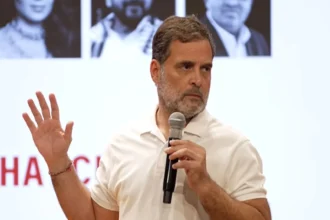
Scindia also criticised the Congress over its position on the satellite internet dispute, referring to the exchange between Musk and Congress leader Rahul Gandhi on X.
The minister said the party had initially questioned the granting of a licence to a particular company but was now criticising the delay in that company’s operations.
“I don’t think they themselves know whether they’re going left or right,” Scindia said, adding that the Congress lacked clarity on the issue.