



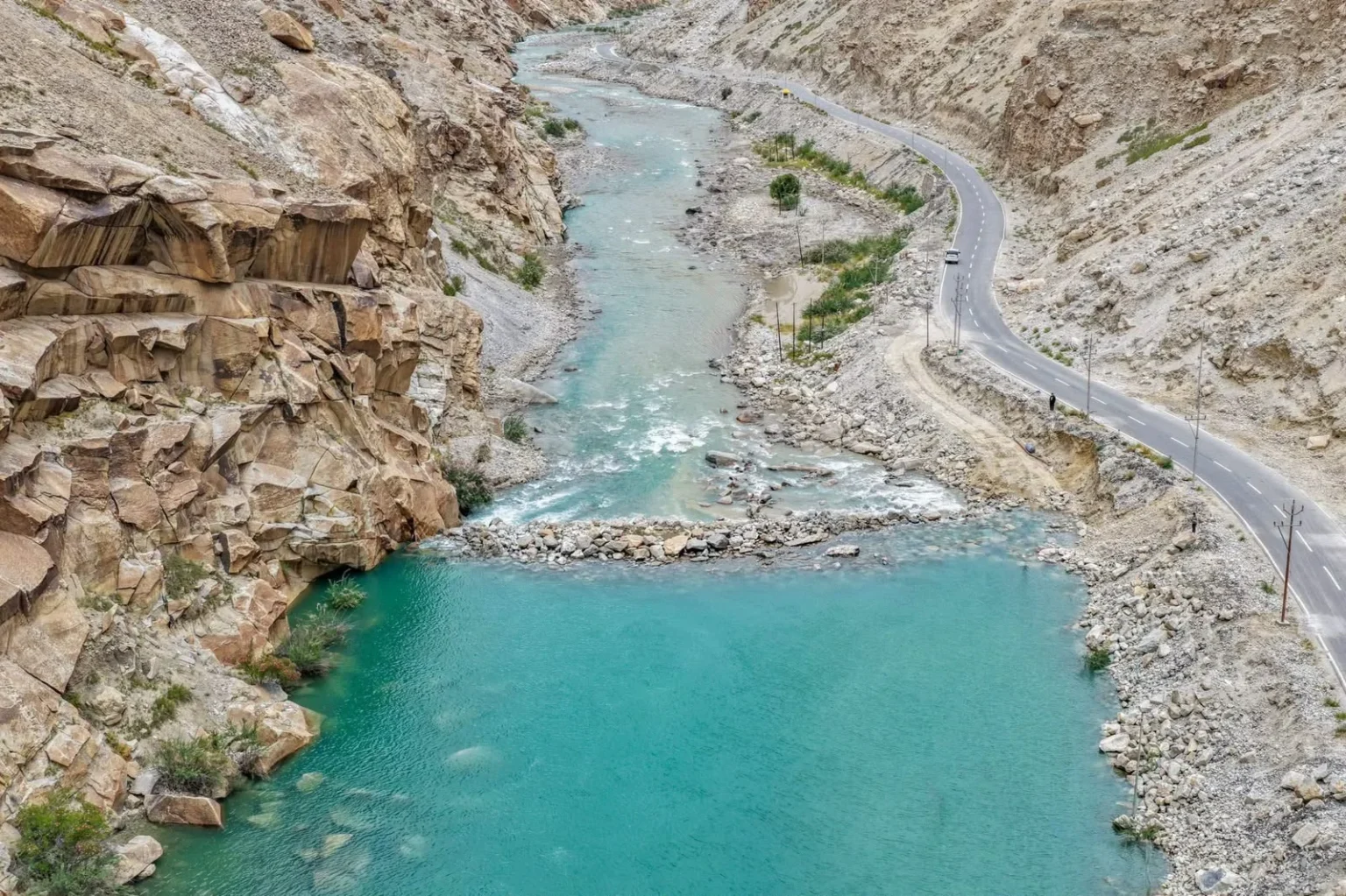
LEH, SEPTEMBER 19: Five rock check dams constructed along the Sindhu River and its tributaries in Ladakh have largely withstood water flows exceeding 200 cusecs during the peak summer months, offering an early test of the administration’s low-cost, locally sourced approach to water conservation.
The five structures were built over the past four months as part of a pilot initiative aimed at improving water security, agricultural sustainability and climate resilience in the high-altitude region, the Ladakh administration said.
The pilot project began on May 27, when the river’s flow was around 20 cusecs. The check dams were constructed using boulders sourced locally from the riverbed, without cement, concrete or steel.

As summer progressed, the water flow increased to more than 200 cusecs, subjecting the structures to substantially higher water pressure.
“The pilot structures have largely withstood the intense water pressure of more than 200 cusecs,” the Lieutenant Governor said after an inspection of the structures.
An engineering team was recently deputed to assess the stability and condition of all five check dams and determine whether the high summer flow had caused any structural damage.
The inspection found that the structures had remained largely stable. However, a minor breach was detected in the first rock check dam at Upshi near Leh, which is now being repaired by engineers, the administration said.
The inspection also found deposits of fine-quality washed sand upstream of the structures, which officials said had further contributed to their stability.
With winter approaching, the river’s flow has now declined sharply to around 30 cusecs, providing engineers an opportunity to assess the structures and incorporate lessons from the pilot phase into future projects.
The administration said the initiative would provide technical insights into designing and executing more durable and resilient check dams in Ladakh.
The project has also received support from local communities, whose participation has been identified as an important component of efforts to address the region’s water and agricultural challenges.
The Lieutenant Governor thanked local communities for their support and reiterated the administration’s focus on water conservation, agricultural sustainability and climate resilience.
The pilot is intended to assess whether low-cost, locally sourced and cement-free rock structures can offer a practical approach to water management in Ladakh’s challenging high-altitude environment.