




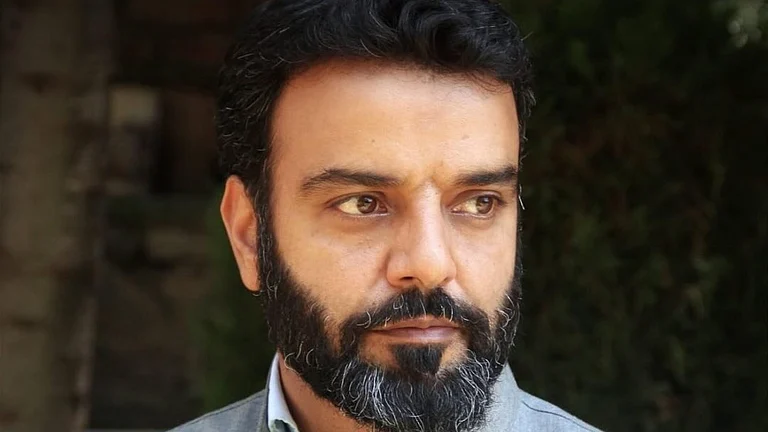
Srinagar, November 3: The National Conference on Tuesday launched a sharp counterattack against its former leader and Srinagar MP Aga Syed Ruhullah Mehdi following his resignation from the party, questioning his record on special status and reservation issues and asking why he did not raise these concerns during the Lieutenant Governor’s rule.
In a strongly worded statement, the NC accused Ruhullah of using the issues of Article 370 and reservation to justify his departure, alleging that his criticism of the party leadership reflected “mental and moral bankruptcy” and “self-obsession”.
The party also questioned his continued association with the NC during its previous governments, particularly his tenure as a minister in 2010, and said he had contested the 2014 Assembly elections on the party ticket without raising the issues he had invoked while announcing his resignation.
“He only remembered to resign when he was told to by the party president. The same way he only remembered 2010 today when it suited him,” the statement said.
Questioning Ruhullah’s parliamentary record, the NC asked what efforts he had made to secure support for the restoration of Jammu and Kashmir’s special status during his tenure as Srinagar MP.
The party acknowledged that he had managed to gather signatures of more than 100 MPs from different political parties for an impeachment motion against Allahabad High Court judge Shekhar Kumar Yadav, but asked whether he had made a similar effort on special status or statehood.
“Can he tell us if he ever made such an effort to gather signatures of MPs for the restoration of special status or statehood?” the statement asked, adding that he had not moved any resolution or bill in Parliament on the issue.
The NC further questioned whether Ruhullah had raised the alleged interference of the Lieutenant Governor in departments falling under the elected government or spoken about what it described as the undermining of the people’s mandate by the Centre.
On the reservation issue, the party said the alleged injustice against candidates belonging to the open merit category had taken place during LG rule and maintained that it had made changes to the existing system a key election promise.
The statement said the NC government had constituted a Cabinet sub-committee and taken initial steps towards changes in the reservation policy, but alleged that the file had been stalled by “the powers that be”.
It questioned whether Ruhullah had raised the matter in Parliament or sought an explanation from the Centre over the alleged delay in implementing the Cabinet’s decision.
The party also asked whether the MP had organised any protest against the LG administration during the six months between his election to Parliament and the formation of the elected government in Jammu and Kashmir.
Defending its position on special status and statehood, the NC said its demand for restoration of statehood was not at the cost of Article 370 or the constitutional rights of the people.
“Our thrust on restoration of statehood is not and will never be at the expense of the special status,” the statement said, adding that the party’s political ideology continued to be rooted in the protection of Jammu and Kashmir’s identity and constitutional rights.
Describing the process of reclaiming what had been taken away from Jammu and Kashmir as one requiring “deft politics, not theatrics”, the party said political demonstrations might attract temporary public attention but would not necessarily deliver results.
The NC also accused Ruhullah of working against the party during the Budgam Assembly by-election, alleging that he had become instrumental in its defeat despite being a member of the organisation.
“Where was his conscience then? Backstabbing the same party he owed his political existence,” the statement said.
Ruhullah, who served as an MLA for three terms, held a ministerial position in the NC government and was subsequently elected to the Lok Sabha from Srinagar on the party ticket, announced his departure from the organisation on Tuesday, citing differences over its position on special status, reservation and other commitments.