




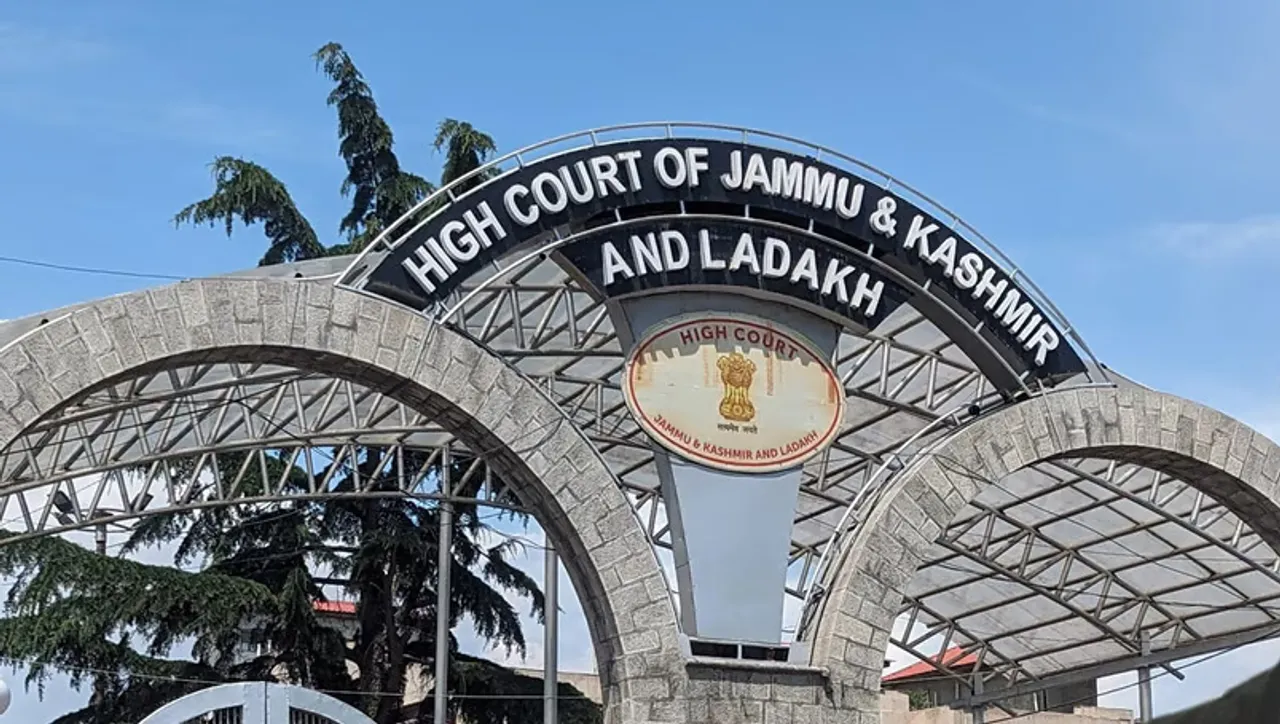
Srinagar, Sep 10: The Jammu, Kashmir and Ladakh High Court has quashed the Public Safety Act (PSA) detention of a Kupwara scholar, holding that mere possession of books with “dispiriting titles” does not make an academic a criminal warranting preventive detention.
Justice Moksha Khajuria Kazmi, in an order passed last week, said the authorities had failed to establish any specific subversive or prejudicial activity by Shafat Maqbool Wani that could justify invoking the PSA against him.
“It also needs to be emphasised here that the respondents have not shown any subversive activity against the name of petitioner, which compelled them to take recourse to preventive detention,” the court said.

Wani had been detained under the PSA last year. The detention order cited several grounds, including his father’s former militant links, invitations to international academic conferences, books found in his possession and a case registered against him under the Unlawful Activities (Prevention) Act, in which he had been granted bail.
The court, however, found that the detaining authority had not adequately applied its mind to whether Wani had engaged in any activity prejudicial to the state.
“Although the respondents have reflected in the counter affidavit as also in the grounds of detention that the detenue had been granted bail, therefore, they have not been oblivious to this fact,” the court observed.
“However, at the same time, it can very safely be said that the detaining authority does not appear to have made any effort to derive satisfaction as regards the prejudicial activity of the petitioner/detenue warranting his preventive detention,” it added.
The court said the petitioner’s contention that there had been “non-application of mind” by the detaining authority in ordering his detention therefore had substance.
The detention order had also relied on Wani’s family background, stating that his father had been associated with the militant group Al-Barq before surrendering in 1990.
“(He) has been brought up in a family having separatist ideology and as such, the anti-India and separatist feelings have got inculcated in the detenue since childhood,” the police had said.
The authorities also cited Wani’s invitations to international academic conferences, including the Middle Eastern, South Asian and African Studies Graduate Students Conference at Columbia University and the Eighth Annual South Asia Conference at Dublin City University.
Books described in the detention grounds as “anti-national” literature were another factor cited against him.
The High Court, however, noted that one of the books had wrongly been attributed to Wani as its author.
“The alleged anti-national literature shown to have been seized from the detenue has also presumably weighed with the respondents to brand the detenue as an anti-national. However, the said literature has wrongly been attributed to the detenue as having been authored by him,” the court said.
It further held that Wani’s status as an academic scholar had to be taken into account.
“The learned counsel for the petitioner is quite justified in submitting that the petitioner, being an academic scholar, is expected to be in possession of a variety of literary means,” Justice Kazmi said.
“A mere possession of the books with dispiriting titles does not ipso facto make the petitioner/detenue a criminal against whom the preventive detention was required to be invoked,” the court added.
The ruling comes amid heightened scrutiny of books and literature in Jammu and Kashmir. In August last year, the J&K administration banned 25 books, alleging that they promoted “secessionist sentiment and false narratives”.
This year, the government also directed government and private schools, colleges, universities, coaching centres and public libraries to screen books and journals for “inappropriate or objectionable content”.