



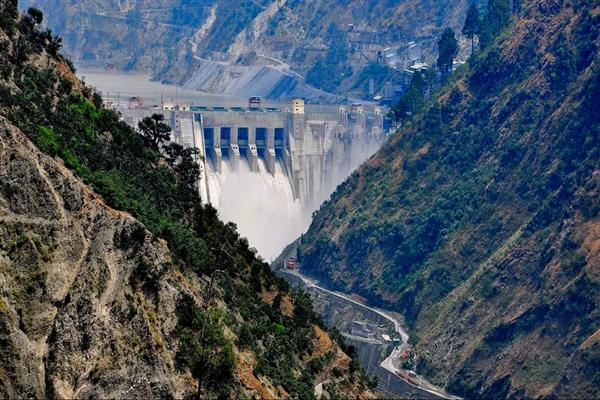
Jammu, Feb 10 — The Jammu and Kashmir Government has said the region’s hydropower capacity is projected to more than double to over 7,300 megawatts (MW) by 2031, with several major projects scheduled for commissioning over the next five years.
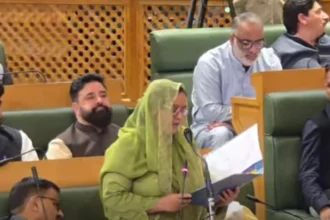
In a written reply to MLA Khurshied Ahmad, the government said J&K currently has 32 operational hydropower projects with an aggregate installed capacity of 3,540.15 MW.
“This includes 13 projects with a capacity of 1,197 MW in J&K’s sector, six projects of 2,250 MW in the central sector, and 12 projects of 92.75 MW in the private sector,” the government said.
The reply said an additional 3,704.5 MW is expected to be added between 2026–27 and 2030–31 through eight proposed and six under-construction projects. Chief Minister Omar Abdullah holds the Power Development portfolio.
According to the government, 1,685.7 MW is expected to be added in 2026–27, followed by 577.5 MW in 2027–28, 1,370 MW in 2029–30, and 141 MW in 2030–31, taking the total installed capacity to 7,314.85 MW.
Projects scheduled for commissioning in 2026–27 include the 1,000 MW Pakaldul, 624 MW Kiru, 12 MW Karnah, and 49.70 MW JKEDA projects. In 2027–28, the 540 MW Kwar and 37.5 MW Parnai projects are expected to come online.
For 2029–30, the government said the 850 MW Ratle, 240 MW Uri-I Stage II, 260 MW Dulhasti-II, and 20.50 MW JKEDA projects are targeted for completion. In 2030–31, the 93 MW New Ganderbal and 48 MW Lower Kalnai projects are proposed to be commissioned.
Read more: Editorial | Why Local Energy Control Matters
Responding to a separate question on the Ans (Nandoli) hydropower project in the Gulabgarh constituency, the Chief Minister said the project was tendered in 2011–12, allotted in November 2012, and the implementation agreement was executed in March 2013.
“Execution of the project has been delayed due to non-performance by the Independent Power Producer,” the government said, adding that a Notice of Default was issued to the IPP in August 2025.
The reply said the IPP later submitted the Detailed Project Report along with a financial analysis proposing a 40-year levelised tariff of Rs 7.30 per unit, which “renders the project techno-economically unviable as per prevailing market tariffs.”
The IPP has sought exit from the project and refund of the deposited premium, citing external factors and policy constraints. “The matter is under consideration by the JKSPDCC in accordance with the provisions of the Implementation Agreement and the Hydro Electric Power Policy 2011,” the government said.
What do the Implementation Agreement and Hydro Electric Power Policy 2011 provide?
Implementation Agreement (IA)
The Implementation Agreement is a legally binding contract between the J&K Government (or its power corporation) and a private developer or IPP. It lays down:
- Project timelines and milestones, including deadlines for DPR submission, financial closure, and construction
- Rights and obligations of both parties
- Tariff principles and power off-take arrangements
- Default clauses, allowing the government to issue notices or terminate the project in case of non-performance
- Exit provisions, which govern whether an IPP can withdraw from a project and under what financial terms, including treatment of deposited premiums
Hydro Electric Power Policy, 2011
The 2011 policy provides the overall framework for private and joint-sector hydropower development in J&K. Key provisions include:
- Eligibility and bidding norms for developers
- Revenue sharing and premium structure payable to the government
- Tariff viability benchmarks, ensuring projects remain competitive with market power prices
- Conditions for project cancellation or takeover in case of delays or non-compliance
- Protection of state interests, including water usage rights and long-term power allocation
Together, the IA and the 2011 policy guide decisions on delays, defaults, project exits, and whether a hydropower project can continue, be restructured, or be terminated.