


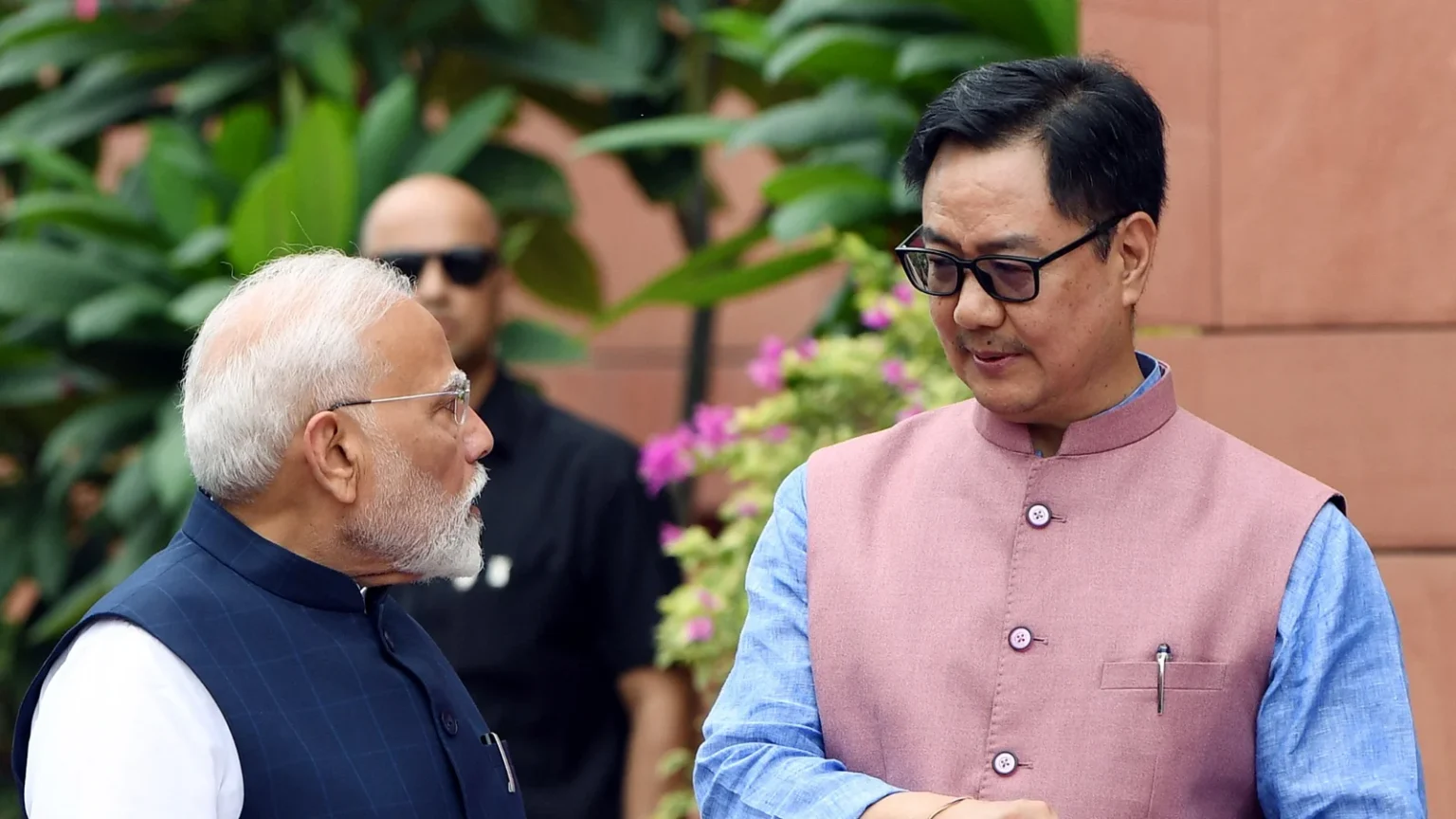
New Delhi, August 17: Union Minister for Parliamentary Affairs and Minority Affairs Kiren Rijiju has sought to explain what he described as a “dimagi Naxal”, saying the term applies to those who support Maoists, stand with separatists or back the restoration of Article 370.
Rijiju’s remarks came after Congress leaders, including former Union minister P Chidambaram, said they were proud of being “dimagi Naxals” following Prime Minister Narendra Modi’s Independence Day reference to the presence of such elements in the country’s “power corridors”.
Reposting a post in which Congress leaders described themselves as “dimagi Naxals”, Rijiju said Modi had not branded opposition leaders as such and laid out his own interpretation of the term.
“Very unfortunate & highly damaging statement by respected former Home Minister of India. PM ji didn’t say opposition leaders are Dimagi Naxals. Only following are Dimagi Naxals,” Rijiju said.
He then listed three categories: “Who support Maoists and reject Indian Constitution”; “who stand with separatists and support Article 370”; and “who want to cut chicken neck to separate North-East from India.”
The remarks drew a response from Peoples Democratic Party chief Mehbooba Mufti, who said she supported Article 370 and appeared to embrace Rijiju’s description.
“I support 370. So I am a dimagi Naxal,” Mufti said in a post responding to Rijiju.
The exchange followed Modi’s Independence Day address, in which the Prime Minister said the country still had “dimagi Naxals” operating in its power corridors and argued that such elements needed to be isolated.
Rijiju’s intervention has since turned the political debate towards the meaning of the term and the issues he associates with it, particularly Maoist violence, separatism and the constitutional status of Jammu and Kashmir.
Article 370, which provided special constitutional provisions for Jammu and Kashmir, was abrogated by the Centre in August 2019 and the erstwhile state was subsequently reorganised into the Union Territories of Jammu and Kashmir and Ladakh.