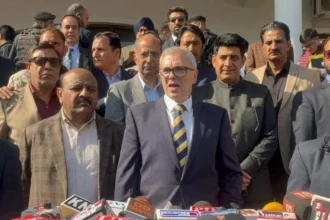




JAMMU, Aug 11: A four-member government-constituted panel studying “demographic changes” across the country arrived in Jammu on Monday and is scheduled to visit areas inhabited by Rohingya and Bangladeshi nationals, besides locations along the International Border, officials said.
The committee, headed by retired Justice Prakash Prabhakar Navlekar, will remain in Jammu till August 12 and is expected to hold consultations with senior officials and other stakeholders as part of its assessment of demographic patterns and related issues.
Soon after the panel’s arrival, Chief Secretary Atal Dulloo and Director General of Police Nalin Prabhat visited the committee at a hotel and held discussions with its members, officials said.

During the visit, officials are scheduled to brief the panel on Jammu’s demographic profile and changing population trends. The committee is also expected to visit areas considered sensitive from security and administrative perspectives.
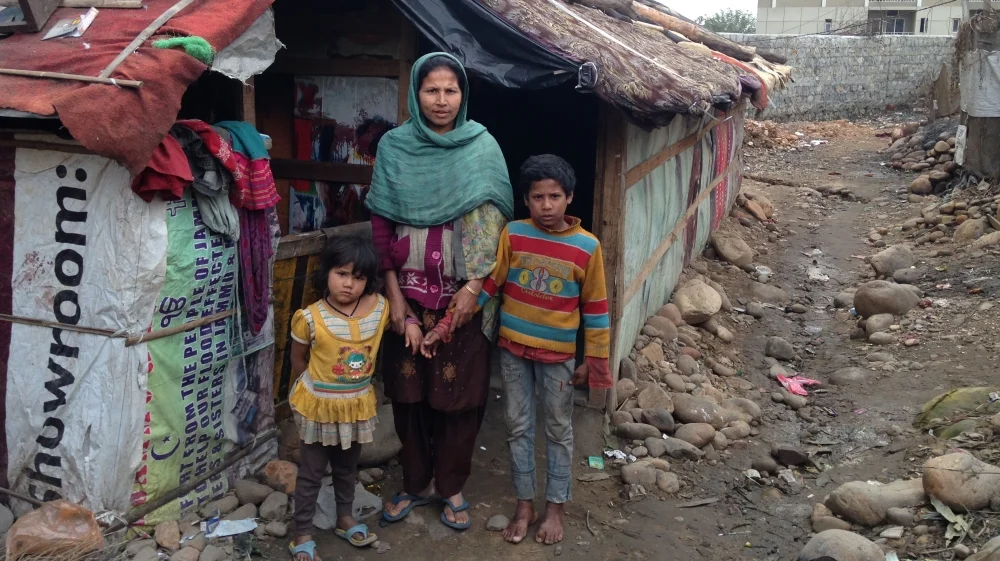
Officials said the panel would visit settlements where Rohingya and Bangladeshi nationals are residing and gather inputs on population patterns and other issues linked to demographic changes.
The presence of Rohingya in Jammu has been a subject of political and security debate for several years. Rohingya, a Muslim minority from Myanmar, began arriving in India in significant numbers after fleeing persecution and violence in Myanmar, with many entering through Bangladesh and settling in different parts of India, including Jammu.
Government data cited by officials has previously put the number of foreign nationals, including Rohingya Muslims and Bangladeshi nationals, residing in Jammu and Samba districts at more than 13,700. Their numbers were reported to have increased by over 6,000 between 2008 and 2016.
In March 2021, police identified more than 270 Rohingya, including women and children, during a verification drive in Jammu city. They were subsequently lodged at a holding centre inside the Kathua Sub-Jail.
The legal status of Rohingya seeking refuge in India, however, involves a distinction between Indian domestic law and international refugee law.
India is not a party to the 1951 Refugee Convention or its 1967 Protocol and does not have a comprehensive domestic refugee law that automatically grants refugee status to people fleeing persecution or armed conflict. The government therefore retains authority under Indian law to regulate the entry and residence of foreign nationals.
At the same time, international refugee law recognises the principle of non-refoulement, under which a person should not be returned to a country where they face persecution or other serious harm. The United Nations High Commissioner for Refugees (UNHCR) considers non-refoulement to be a principle of customary international law.
This means that fleeing persecution in Myanmar can provide a basis for an individual to seek international protection, but it does not by itself confer an automatic or permanent right to reside in India. Each person’s legal position can depend on the circumstances and the applicable Indian legal framework.
The issue has also reached the Supreme Court. In May 2025, the court declined to halt the government’s proposed deportation of Rohingya migrants and observed that the constitutional right to reside and settle in India is associated with citizens. The proceedings have nevertheless kept questions surrounding the treatment and deportation of Rohingya in the legal spotlight.
The presence of Rohingya and Bangladeshi nationals has also drawn criticism from BJP leaders and right-wing groups, who have called for the identification and deportation of those found to be residing in India without valid documents. They have raised concerns over national security, demographic changes and pressure on local resources.
The government panel’s visit is expected to examine such demographic trends and collect inputs from officials and other stakeholders before preparing its assessment and recommendations.
The Union government constituted the high-level committee in May to study demographic changes arising from illegal immigration and other factors and recommend measures to address them.
Prime Minister Narendra Modi had announced the “High-powered Demography Mission” in his Independence Day address on August 15 last year. The Union Cabinet subsequently approved the mission on September 11.
Besides Justice Navlekar, the committee comprises retired IAS officer Durga Shankar Mishra, retired IPS officer Balaji Srivastava and economist Shamika Ravi, along with the Census Commissioner. The Joint Secretary (Foreigners-I) in the Ministry of Home Affairs is the Member Secretary.