



Srinagar, March 4 — Global oil and gas prices soared Tuesday after fighting involving the United States, Israel and Iran disrupted energy exports from the Middle East, with shipping through the Strait of Hormuz grinding to a halt and production cuts reported from Iraq to Qatar.
Benchmark Brent crude settled up $3.66, or 4.7 per cent, at $81.40 a barrel — its highest close since January 2025. European natural gas prices spiked as much as 40 per cent before trimming gains, compounding a similar surge a day earlier. Prices of sugar, fertilizers and soybeans also climbed amid fears of prolonged supply shocks.
The escalation has effectively shut traffic through the Strait of Hormuz — a narrow waterway between Iran and Oman that links the Persian Gulf to the Arabian Sea. The strait is one of the world’s most critical energy chokepoints, handling roughly 20 per cent of global oil and liquefied natural gas (LNG) supplies. Any disruption there reverberates across energy and commodity markets worldwide.
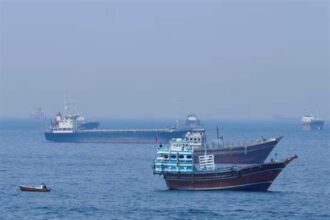
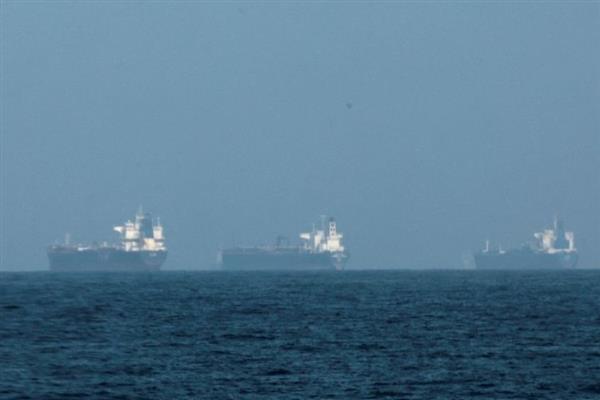
According to vessel-tracking data, crude tanker transits through the strait fell to just four ships on March 1, compared with an average of 24 per day since January. Three of the four vessels were Iran-flagged. Hundreds of oil and LNG tankers are now stranded near major hubs such as the UAE’s Fujairah port, unable to reach buyers in Asia and Europe.
US President Donald Trump said the US Navy could begin escorting oil tankers through the Strait of Hormuz if required. He also announced that he had directed the US International Development Finance Corporation to provide political risk insurance and financial guarantees for maritime trade in the Gulf.
“It was one of the administration’s most aggressive steps to try to contain soaring energy prices,” officials said, as Washington attempts to prevent a broader economic fallout.
Iraq, the second-largest producer in OPEC, warned it may be forced to cut more than 3 million barrels per day within days if tankers cannot access loading terminals. Officials said production at the Rumaila oil field has already been reduced by 700,000 barrels per day, while output at West Qurna 2 has been cut by 460,000 barrels per day.
Energy infrastructure across the Gulf has also come under strain. A fuel tank at Oman’s Duqm port was struck by a drone, and a fire broke out at Fujairah, slowing refuelling operations. Saudi energy giant Saudi Aramco is attempting to reroute crude exports to its Red Sea port of Yanbu, though industry sources say pipeline capacity is limited and could itself become a target.
On Monday, Qatar suspended operations at its liquefied natural gas facilities — among the world’s largest — which account for about 20 per cent of global LNG exports. Saudi Arabia halted output at its biggest domestic refinery, while Israel and Iraq’s Kurdistan region shut portions of their oil and gas production.
The ripple effects are being felt beyond the region. Chinese refiners have begun shutting units amid tightening crude supplies. India, heavily dependent on Middle Eastern energy imports, said it has started rationing gas to industries following Qatar’s shutdown.
In the United States, gasoline prices climbed above $3 per gallon for the first time since November, posing political risks for Trump and his Republican Party ahead of midterm elections.
Analysts warn that if the conflict persists, the shock could reignite inflation in Europe and Asia, potentially derailing fragile economic recoveries. Europe, which relies entirely on imported oil and gas and turned away from Russian supplies after the 2022 Ukraine invasion, may be forced to compete more aggressively for US LNG cargoes to replenish depleted reserves after a cold winter.
Shipping rates have hit record highs as insurers reassess risks and Tehran continues targeting vessels in and around the Strait of Hormuz. Western security experts are also evaluating how long Iran can sustain its missile and drone campaign, even as Gulf states intercept most incoming projectiles.
With nearly a third of global oil production and a fifth of natural gas output tied to the broader region, markets remain on edge as the crisis deepens.